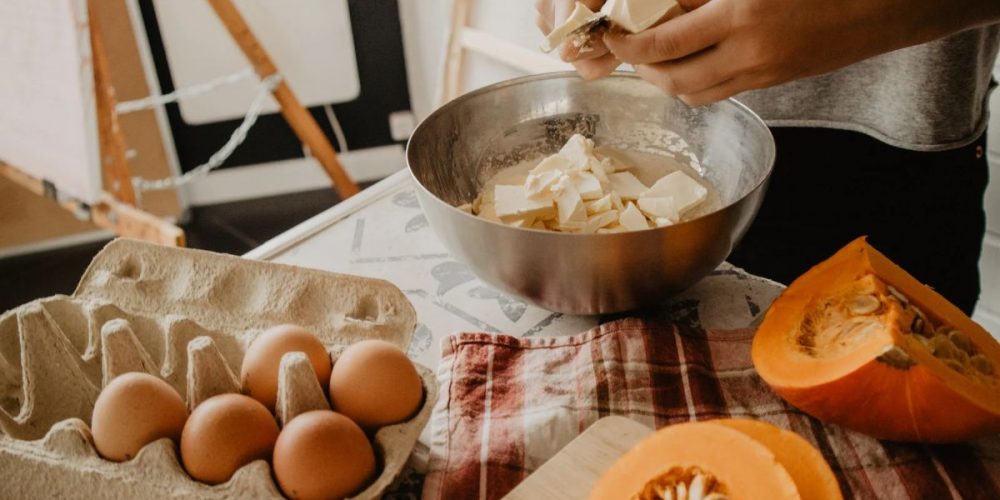
There’s something about the first cool day of fall that makes you want to turn on the oven. Maybe it’s the smell, or maybe it’s just that a warm kitchen feels like the right response to a changing season. Whatever it is, the urge to bake in fall is real, and the good news is that it doesn’t have to cost nearly as much as most people assume.
Fall baking doesn’t have to be expensive. The seasonal ingredients that define it, apples, pears, pumpkin, and warming spices, are all either very affordable right now or easy to make yourself. The biggest savings come from buying staples in bulk, mixing your own spice blends instead of buying pre-mixed ones, and using seasonal fruit instead of expensive add-ins.
Furthermore, the ingredients that define fall baking, are among the most affordable in any grocery store right now. Nearly everything you need for a dozen fall bakes pulls from one short shopping trip: flour, white and brown sugar, butter, eggs, oats, a jar of molasses, two 15-ounce cans of pumpkin, a jar of applesauce, and a bag of baking apples. At a discount grocery store, the whole haul runs below $25. That’s a remarkably good starting point for a season’s worth of baking.
Build Your Baking Pantry Around Staples, Not Recipes
The most expensive way to bake is to buy ingredients specifically for one recipe and use only a portion of each. You end up with half a bag of almond flour, a quarter bottle of espresso extract, and a small tin of something exotic that sat in the pantry until you forgot what it was for. This approach costs more per bake than almost any other method.
The frugal alternative is to build a small, versatile baking pantry around staples that appear across a wide range of recipes, then choose the recipes that fit those staples rather than the other way around. All-purpose flour, baking powder, baking soda, salt, white sugar, brown sugar, butter, eggs, oats, and vegetable oil cover the structural requirements for the vast majority of fall bakes. Everything else is a flavoring, and fall’s flavorings are inexpensive when you source them correctly.
Make Your Own Spice Blends and Save Immediately
Pumpkin pie spice is one of the most useful things to have on hand during fall baking season, and also one of the most straightforward money leaks when you buy it pre-made. A small jar of branded pumpkin spice typically costs $4 to $6. The exact same blend, made from spices you likely already have, costs a fraction of that.
Skip the $5 jar of pumpkin pie spice and mix your own. To make it, all you need are:
- 3 tablespoons cinnamon
- 2 teaspoons ground ginger
- 2 teaspoons nutmeg, and
- 1½ teaspoons cloves
That’s roughly 60 cents of spices most of us already own, and it fills a small jar that lasts all season. The same logic applies to chai spice blends, apple pie seasoning, and any other pre-mixed fall spice product. If you can read the ingredients on the back of the jar and you’ve got most of them already, you don’t need to buy the pre-mixed version.
Use Seasonal Fruit Instead of Expensive Add-Ins
Fall is genuinely generous with its fruit, and baking with what’s in season is one of the clearest examples of how letting the season guide your shopping produces better food at a lower cost at the same time.
Apples are at their cheapest and best right now. Buy apples by the bag, not by the pound. That bag covers an apple cake, an apple crisp, a batch of muffins, and still has a few left over for snacking. Buying apples individually by the pound costs considerably more per apple for the same quality fruit.
On the other hand, baking with sweet fruits like apples and pears makes it easy to cut back on added sugar without losing too much sweetness. This is a practical budget tip as much as a nutritional one: if the fruit is naturally sweet, you can reduce the amount of sugar a recipe calls forwithout noticing the difference in the finished bake. Less sugar means a slightly cheaper bake and a result that tastes more like the fruit itself.
Pears are particularly overlooked in fall baking, and they’re one of the better-value fruits available right now. They soften beautifully when baked, pair well with warming spices, and can stand in for apples in most recipes. Canned pears are worth mentioning specifically, they’re considerably cheaper than fresh and work particularly well in cakes and crumbles where texture is less critical.
Swap Oil for Butter in Quick Breads and Muffins
This isn’t a flavor tip, it’s a budget one. Butter costs more than vegetable oil, and in quick breads and muffins (as opposed to cookies or pastry, where butter’s specific properties matter more), the difference in the finished result is minimal. A pumpkin bread made with oil comes out more tender and stays moist longer than one made with butter, which is a functional improvement on top of the cost saving.
A cup of vegetable oil costs less than the equivalent amount of butter almost everywhere, and when you’re baking multiple batches across the season, that swap adds up. Keep butter for the applications where it genuinely matters: shortbread, pastry, and cookies where the fat’s specific properties affect the texture. Instead, reach for oil in quick breads, muffins, and cakes where it doesn’t.
Buy Flour, Sugar, and Oats in Larger Quantities
If you’re going to do any meaningful volume of fall baking, buying your core dry ingredients in larger quantities rather than standard grocery store sizes pays off quickly. A 5-pound bag of all-purpose flour costs considerably less per ounce than the standard 2-pound bag, and the same holds for sugar and oats.
Oats are particularly worth buying in a larger quantity because they appear across so many different fall baking applications. Crumble toppings, cookie bases, granola, oat bread, and muffins all draw from the same bag. A large canister of rolled oats at a warehouse retailer or in the bulk bins costs a fraction per serving of the smaller bags and doesn’t go stale quickly when stored in an airtight container.
Brown sugar deserves special mention because it hardens in the bag over time if it’s not stored properly, which leads people to throw it away or replace it unnecessarily. Keep brown sugar in a tightly sealed container or zip-lock bag, and it’ll stay soft and usable for months. A dry or hardened bag isn’t ruined, a brief microwave with a damp paper towel over the bowl softens it right back up.
Freeze Cookie Dough and Quick Bread Batter
One of the smartest habits in fall baking is making more than you need in a single session and freezing the surplus. Double any cookie recipe, scoop the extra dough into balls, and freeze them solid on a sheet pan before bagging. Bake six at a time straight from frozen, adding two minutes to the bake time. That’s fifteen minutes on a random Tuesday, and the house smells like October again with zero extra cleanup.
Use What’s Already Slightly Overripe
Fall produce that’s past its perfect eating window is often ideal for baking, and it’s frequently available at a reduced price or already sitting in your fruit bowl. Overripe bananas make a better banana bread than perfect ones. Soft pears that aren’t great for eating raw bake beautifully in a cake or a crumble. Apples that are starting to wrinkle and lose their crunch are perfectly fine chopped into muffins or cooked down into a sauce.
This habit effectively turns food that was about to be wasted into something delicious, which is both good for the budget and good for keeping waste out of the bin. It’s worth checking the reduced-produce section of your grocery store specifically before baking sessions, you’ll often find exactly what you need at a price that makes the finished bake almost free in produce costs.
The Bottom Line
Fall baking on a budget isn’t about compromising on what you make or how it tastes. It’s about being smart with where the money actually goes. Make your own spice blends. Buy apples and oats in larger quantities. Use oil instead of butter in quick breads. Freeze extra dough for effortless future baking sessions. And let the season’s most affordable fruits like apples, pears, pumpkin do the heavy flavor lifting instead of expensive specialty ingredients.
Frequently Asked Questios (FAQ’s)
What’s the cheapest fall baking ingredient worth keeping in stock? Oats are probably the single best-value fall baking ingredient available. They’re inexpensive in larger quantities, appear in crumbles, cookies, muffins, granola, and breads, and have a long shelf life when stored in an airtight container.
Can you substitute oil for butter in fall baking? Yes, in most quick breads, muffins, and cakes. Use about ¾ of the amount of oil compared to the butter called for. So if a recipe uses 1 cup of butter, use ¾ cup of oil. The result is often moister and keeps longer. Don’t swap in cookies and pastry where butter’s specific properties affect texture.
How do you keep brown sugar from hardening? Store it in an airtight container or a sealed zip-lock bag rather than in its original paper packaging. If it’s already hardened, place it in a bowl covered with a damp paper towel and microwave in 20-second intervals until soft again.
Is canned pumpkin as good as homemade? For most baking applications, canned pumpkin puree is perfectly fine and considerably more convenient. Homemade roasted pumpkin puree does have a slightly deeper flavor, but the difference in a heavily spiced pumpkin bread or muffin is small. Canned pumpkin from a discount store is a very reasonable choice for budget fall baking.