Grilling a steak sounds simple. You put meat over fire, you wait, you eat. And yet the gap between a steak that’s merely cooked and one that’s genuinely perfect, deeply seared on the outside, exactly the right color at the center, rested and juicy all the way through — is wider than most people realize until they’ve experienced both. The difference isn’t luck or expensive equipment. It’s a handful of techniques done correctly, most of them before the steak ever touches the grill.
Here, we’ll walk you through every step, from choosing the right cut at the butcher counter to slicing it correctly on the cutting board. Follow it once and you’ll understand not just what to do, but why each step matters, which is what turns a good cook into a confident one.
Step 1: Start With the Right Cut
No amount of technique compensates for a cut of steak that was wrong for the job. The cut determines the vast majority of your outcome before you’ve even lit the grill, so this decision deserves more attention than most home cooks give it.
For grilling, you want cuts with enough fat. Either marbled through the muscle or running along the edge, to stay moist over high heat. The best options for most home grillers are the ribeye, the New York strip, and the T-bone or porterhouse. Each has a distinct character worth knowing.
The ribeye is the most forgiving and arguably the most flavorful cut available for grilling. The generous intramuscular fat (marbling) bastes the meat from the inside as it cooks, which means it’s harder to overcook and produces an exceptionally rich, juicy result. If you’re cooking for someone who wants an impressive steak with minimal risk, the ribeye is your answer.
The New York strip is leaner than the ribeye but has a firmer, more satisfying chew and a clean, beefy flavor that many steak enthusiasts prefer. It’s less forgiving of overcooking than the ribeye, which means temperature control matters more. But, the reward for getting it right is a steak with excellent structure and flavor.
The T-bone and porterhouse give you two steaks in one: a strip on one side of the bone and a tenderloin filet on the other. The tenderloin is exceptionally tender but has very little fat and can overcook quickly, while the strip side needs more time. Managing the two sections simultaneously is the main challenge of grilling a T-bone, but the result is impressive and the bone adds flavor during cooking.
Whatever cut you choose, aim for at least one inch of thickness, and ideally closer to one and a half inches. Thin steaks cook through too quickly for you to develop a proper sear on the outside without overcooking the inside. A thicker steak gives you time to build the crust you’re after while maintaining control over the interior.

Step 2: Season Early and Season Well
Seasoning a steak properly is one of the most impactful and most misunderstood steps in the entire process. The single most important thing you can do is salt your steak early. Ideally, 45 minutes to an hour before grilling, or even the night before if you’re planning ahead.
Here’s why it matters: salt initially draws moisture to the surface of the meat through osmosis. If you grill immediately after salting, that surface moisture creates steam rather than a sear, and you lose the browning you worked for. But given enough time, at least 45 minutes, that same moisture is reabsorbed back into the muscle along with the dissolved salt, seasoning the interior of the steak and actually helping it retain more juice during cooking. America’s Test Kitchen, which has grilled tens of thousands of steaks in its test kitchen over the years, recommends salting anywhere from one hour to 24 hours in advance for exactly this reason.
Use kosher salt rather than table salt, the larger crystals are easier to apply evenly and more forgiving to work with. Season generously on both sides and on the edges. Steak can take more salt than you think, and under-seasoned steak is one of the most common disappointments of home grilling.
For seasoning beyond salt, freshly cracked black pepper is the only other essential. Apply it just before the steak goes on the grill rather than in advance, as pepper can become acrid if it sits on the meat for too long. Garlic powder, smoked paprika, and onion powder can all be added to the pepper for a dry rub-style approach, but keep the flavors restrained enough that they enhance rather than compete with the beef itself.
Step 3: Bring the Steak to Room Temperature
Take your steak out of the refrigerator 30 to 45 minutes before it goes on the grill. A cold steak placed directly on a hot grill creates a steep temperature gradient: the outside cooks rapidly while the cold center takes much longer to catch up, resulting in an overcooked exterior by the time the interior reaches the right temperature.
Allowing the steak to come toward room temperature first means more even cooking from edge to center. It also means a shorter total time on the grill, which gives you more control over the outcome. This is a small habit with a meaningful impact on your results.
One important caveat: don’t leave your steak sitting out for longer than an hour, and never in a warm kitchen where food safety temperatures become a concern. Thirty to 45 minutes on the counter is the target.
Step 4: Get the Grill Ripping Hot
This is where many home grillers go wrong. A steak needs intense heat to develop the Maillard reaction, the chemical process that creates the brown, flavorful crust that defines a well-grilled steak. A grill that’s merely warm will steam and gray the surface rather than sear it, producing a steak that’s cooked through but lacks the color, texture, and depth of flavor that high heat provides.
For gas grills, turn all burners to high, close the lid, and preheat for at least 10 to 15 minutes. Your target grill temperature is 450 to 500°F, the range recommended by culinary experts including the team at Ruth’s Chris, one of the most respected steakhouses in the country. A properly preheated gas grill should produce a brief flare-up when you place the steak on the grate.
For charcoal grills, you want a full chimney of hot coals spread across two-thirds of the grill, leaving one side as an indirect zone. The hot side handles the sear; the indirect side lets you finish the steak to the right internal temperature without burning the exterior. This two-zone setup is the most useful configuration for home grilling and gives you far more control than grilling entirely over direct heat.
Before the steak goes on, oil the grill grates using tongs and a folded paper towel soaked in vegetable oil, not the steak itself. This prevents sticking and promotes even contact between the meat and the grill surface.
Step 5: Pat the Steak Dry Before It Goes On
Immediately before placing your steak on the grill, pat it thoroughly dry with paper towels on both sides. Any surface moisture on the steak will need to evaporate before browning can occur, which steals time and heat from the searing process. A dry surface makes contact with the grill grate immediately and browns faster, producing better color and more flavor.
This step is especially important if you’ve marinated the steak. Drain any excess marinade and pat the surface dry before grilling.
Step 6: Sear, Then Finish With Indirect Heat
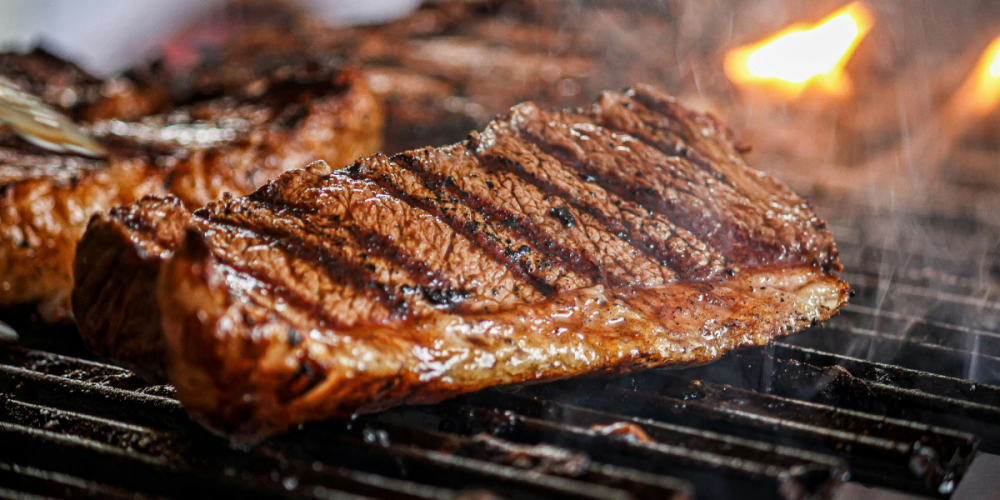
Place the steak on the hottest part of the grill and resist the urge to move it immediately. Let it sear for 3 to 4 minutes on the first side without disturbing it. This contact time is what builds the crust. You’ll know it’s ready to flip when the steak releases easily from the grate without sticking or tearing. If it’s pulling and resisting, give it another 30 to 60 seconds.
Flip the steak and sear the second side for 3 to 4 minutes. At this point, if the steak is less than an inch thick and you’re targeting medium-rare, it may be close to done. For thicker cuts, move the steak to the indirect heat zone, close the lid, and let it finish cooking to your target internal temperature away from direct flame.
One technique worth knowing for very thick steaks: the reverse sear. Instead of searing first and finishing over indirect heat, you do the opposite — cook the steak slowly over indirect heat first until it’s 10 to 15 degrees below your target temperature, then move it to the hot side for a final sear. The result is a more evenly cooked interior with an exceptionally well-developed crust. It takes longer but produces outstanding results for steaks 1.5 inches or thicker.
Step 7: Use a Meat Thermometer — Every Time
The single most important tool for grilling a perfect steak isn’t the grill or the tongs. It’s a reliable instant-read meat thermometer. Guessing doneness by touch, timing, or color is unreliable, and the consequences of getting it wrong, an overcooked steak you can’t fix, are permanent. A quality instant-read thermometer removes all of the guesswork.
Here are the internal temperatures to target, measured at the thickest point of the steak:
- Rare: 120 to 125°F — deep red center, very soft
- Medium-rare: 130 to 135°F — warm red center, tender and juicy; the ideal for most cuts
- Medium: 140 to 145°F — pink center, firmer texture
- Medium-well: 150 to 155°F — slightly pink, noticeably firmer
- Well-done: 160°F and above — no pink, fully firm
Pull the steak off the grill when it’s 5 degrees below your target temperature. It will continue to cook from residual heat during the resting phase, a process called carryover cooking. You will reach your target by the time it’s ready to serve.
Medium-rare is widely considered the ideal doneness for most cuts, and for good reason: it represents the point at which the muscle fibers are just firm enough to have structure without tightening to the point of toughness, and the fat has had enough heat to render without drying out.
Step 8: Rest the Steak Before You Cut It
Resting is the step that home grillers most frequently skip, and it’s the one that makes the difference between a juicy steak and a plate full of lost juice. When meat is exposed to heat, the muscle fibers contract and push moisture toward the center of the steak. Cutting into it immediately releases all of that accumulated juice onto the cutting board rather than keeping it in the meat.
Resting gives the muscle fibers time to relax and reabsorb that moisture throughout the steak. The result is a noticeably juicier bite across the entire cut rather than a dry outer portion and a wet cutting board.
Rest your steak on a wire rack or cutting board for 5 minutes for thinner cuts, or up to 10 minutes for a thick ribeye or T-bone. Tent it loosely with foil if you want to keep it warm, but don’t wrap it tightly, which traps steam and softens the crust you worked to build.
Step 9: Slice Against the Grain
How you cut the steak matters more than most people realize. Every cut of beef has a visible grain, the direction in which the muscle fibers run. Cutting against the grain (perpendicular to those fibers rather than parallel to them) shortens the fibers in each slice, which makes the meat significantly more tender to eat regardless of the cut. Cutting with the grain produces long, intact fibers that require more chewing and make even a well-cooked steak feel tougher than it is.
For cuts like flank steak and skirt steak, slicing against the grain is essential, these cuts are genuinely tough when sliced incorrectly. For ribeye and strip steaks, the difference is less dramatic but still noticeable. Take a moment to identify the grain direction before you cut, and slice at a slight angle against it.
A Note on Gas vs. Charcoal
The gas versus charcoal debate generates strong opinions in the grilling community, and the honest answer is that both produce excellent steak when used correctly. Charcoal burns hotter than most gas grills, creates a slightly smokier flavor profile, and gives you more control over heat zones through coal placement. Gas is more convenient, heats faster, and offers precise temperature control via the burner dials.
For a first-time griller or anyone prioritizing consistency and ease, a gas grill is the more forgiving tool. For anyone who wants the full open-fire experience and the depth of flavor that charcoal adds, the extra setup time is worth it. Neither is objectively superior, they’re different experiences that both reward good technique.
Quick Reference: The Perfect Steak Checklist
- Choose a cut at least 1 inch thick with good marbling
- Salt generously 45 minutes to 24 hours in advance
- Bring to room temperature 30 to 45 minutes before grilling
- Preheat grill to 450 to 500°F
- Pat the steak dry immediately before grilling
- Sear 3 to 4 minutes per side over direct heat
- Finish over indirect heat and pull at 5°F below target temperature
- Rest for 5 to 10 minutes before cutting
- Slice against the grain
The Bottom Line
Grilling the perfect steak is not complicated, but it does require doing a handful of things correctly and in the right order. Salt early. Get the grill genuinely hot. Use a thermometer. Rest the meat before you cut it. These aren’t advanced techniques, they’re fundamentals, and every single one of them makes a measurable difference in what ends up on the plate. Get these right consistently and you’ll produce steaks that rival what a good steakhouse delivers, every time you fire up the grill.