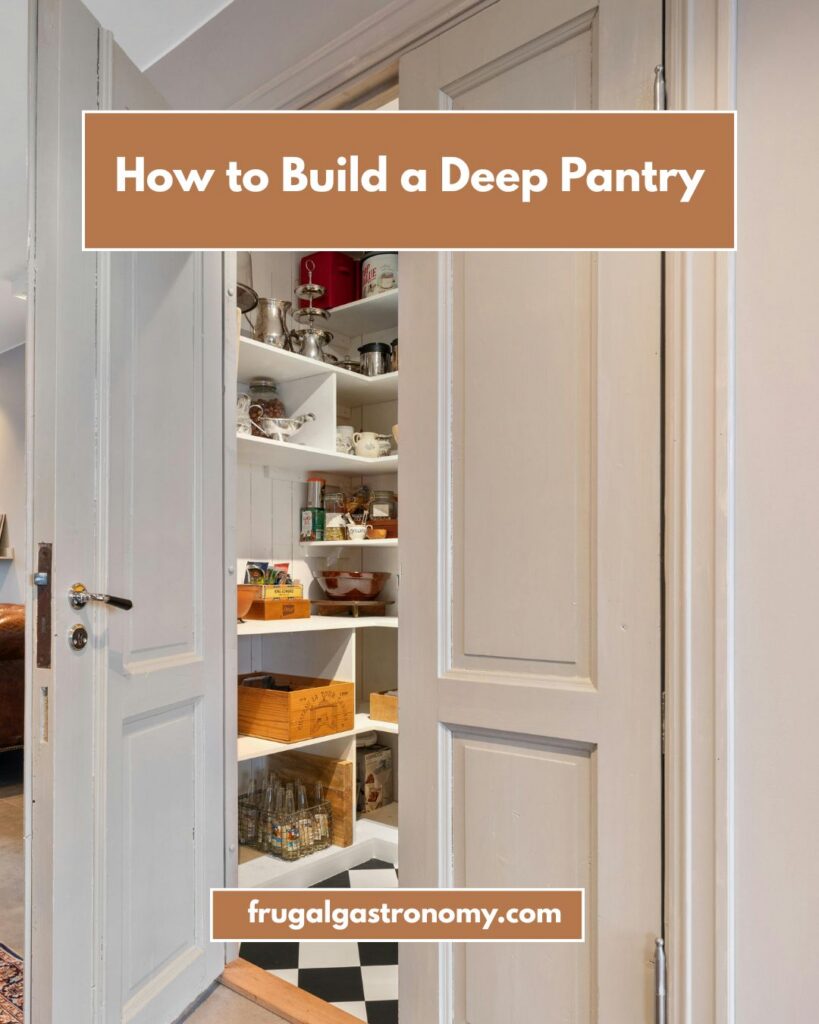
There’s a meaningful difference between a pantry that holds a few days of backup food and a pantry that genuinely buys your household time when something goes wrong. The second kind is what preparedness circles call a deep pantry, and it’s a concept that has quietly become one of the most practical household habits a family can build, regardless of whether you think of yourself as a “prepper” at all.
Recent data underscores why this matters more than it used to. Food availability disruptions jumped 45% in 2024, yet only 28% of households maintained adequate emergency reserves. That gap between rising disruption and low preparedness is exactly what a deep pantry is designed to close, and the good news is that building one doesn’t require a dramatic lifestyle change or a large upfront investment. It requires understanding the concept correctly and applying a few consistent habits over time.
This guide explains what a deep pantry actually is, how it differs from simple stockpiling, and exactly how to build one gradually and affordably.
What a Deep Pantry Actually Is
A deep pantry is not the same thing as hoarding, and that distinction matters both practically and psychologically. A deep pantry isn’t about stockpiling out of fear. It’s about thoughtful, intentional stocking of foods you actually use, built gradually, with variety, in a way your storage space can genuinely support.
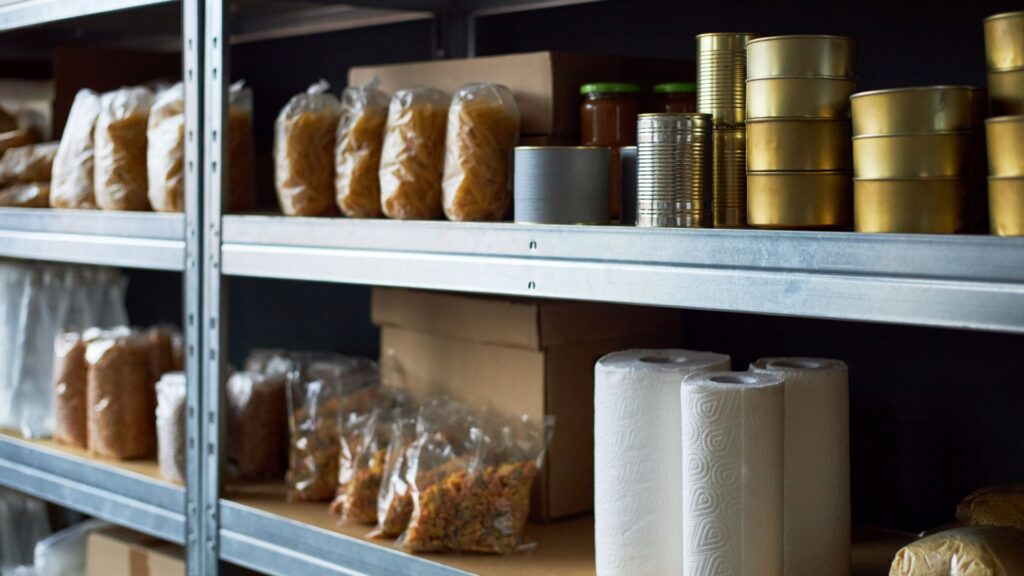
The core idea is simple: instead of keeping just a few days’ worth of the ingredients you regularly cook with, you maintain a rolling supply that always sits well above the bare minimum. If you would normally buy one can of black beans on a shopping trip, you buy two or three. If you’d normally have a week’s worth of rice in the cupboard, you build that up to a month’s worth. The food in a deep pantry is not specialty survival food. It’s simply more of what you already eat, kept at a higher baseline quantity than most households are used to.
This is fundamentally different from the kind of large-scale doomsday stockpiling that the word “prepper” sometimes conjures up. A deep pantry is closer to a financial emergency fund than a bunker. It’s a buffer designed to smooth over disruptions, not a fortress designed to survive a collapse. That framing makes the concept considerably more approachable, and it’s the right way to think about it for almost every household.
Why a Deep Pantry Makes Sense Right Now
The case for building a deep pantry doesn’t require catastrophic thinking. The more realistic scenarios are mundane and far more likely: a job loss that strains the grocery budget for a few weeks, a supply chain disruption that empties certain shelves for days at a time, a winter storm that makes driving to the store unsafe, or simply a stretch of weeks where money is tighter than usual and having food already paid for and on hand takes one source of stress off the table entirely.
Supply chains have shown real fragility in recent years, and grocery prices have risen substantially since 2020. Both of those pressures point in the same direction: a household that has a few weeks of staple food already on hand is more financially resilient and less vulnerable to short-term shocks than one that buys exactly what it needs, exactly when it needs it, every single week. A deep pantry is, in a very real sense, a form of inflation protection. Food bought today at today’s price is food you don’t need to buy later at a higher one.
There’s also a quieter psychological benefit that’s easy to underestimate. Having a stocked pantry can change daily life in a meaningful way. It removes a layer of background anxiety about supply disruptions or financial strain, simply because the basics are already covered. That sense of security is a real and valid reason to build one, even setting aside the financial logic entirely.
The Core Principle: Stock What You Actually Eat
The single most important rule in deep pantry building is to store food you actually eat regularly, not food that theoretically has a long shelf life but that your family has never cooked with. A pantry full of unfamiliar survival rations that nobody wants to eat is a wasted investment regardless of how long it lasts on the shelf.
Before buying anything specifically for pantry-building purposes, take an honest inventory of what your household already cooks with weekly. If your family eats pasta twice a week, pasta belongs in your deep pantry in meaningful quantity. If nobody in your household has ever eaten lentils and you’re not confident you’d cook with them in a real situation, buying twenty pounds of lentils because they’re cheap and shelf-stable is solving the wrong problem.
This principle keeps the deep pantry concept genuinely useful rather than performative. The food gets rotated into regular meals, nothing goes to waste, and the supply naturally refreshes itself as part of your normal cooking and shopping habits rather than sitting untouched and aging in the back of a cupboard.
The Copy-Canning Method: How to Build Gradually
The most practical and financially accessible way to build a deep pantry is a technique sometimes called copy-canning. The simplest way to inexpensively build up your food store is to buy two of a shelf stable item you’d normally buy one of, every time you go grocery shopping. If your usual recipe calls for one can of diced tomatoes, you buy two and keep the extra in your developing pantry stock rather than using it immediately.
This approach costs only a few extra dollars per shopping trip and produces a meaningful pantry buffer within a few months without ever requiring a dedicated large purchase. Copying one or two cans of food per weekly grocery trip can build a working pantry for just a couple of dollars a week, and the pace scales naturally with whatever budget flexibility you have that particular week.
The beauty of copy-canning is that it requires no separate decision-making process. You’re not researching specialty survival foods or making an unfamiliar purchase. You’re simply doubling up on a portion of your normal grocery list, item by item, trip by trip, until your pantry depth grows from a few days to a few weeks and eventually to a month or more if that’s your goal.
Setting a Target: How Deep Is Deep Enough?
Different households will land on different target depths depending on their risk tolerance, available storage space, and budget, but there are a few common benchmarks worth understanding.
A two-week pantry is the most commonly cited starting target in preparedness guidance, and it aligns closely with general emergency preparedness recommendations from agencies like FEMA. For a two-week pantry, the approach should stay simple: buy more of what you already eat, in quantities that would sustain your household for fourteen days without a grocery store trip.
A one-month pantry is a meaningful step up and represents genuine resilience against a longer disruption, whether that’s a job loss, an extended illness, or a more serious supply interruption. Building to this level usually takes several months of consistent copy-canning and gradual bulk purchases of staples like rice and dried beans.
Beyond a month, the law of diminishing returns starts to apply for most households, and the considerations shift toward storage space, rotation discipline, and whether the additional depth genuinely adds value relative to the effort and space required. There’s no universally correct target. The right depth is the one that meaningfully reduces your household’s vulnerability without creating storage problems or significant food waste from items that expire before you get to them.
What to Prioritize: Calorie Density, Protein, and Nutrition Balance
A well-built deep pantry isn’t just about calories. Modern preparedness guidance increasingly emphasizes nutrition, variety, and long-term sustainability rather than simply maximizing the number of calories stored. The goal is to create a system that supports sustained health and energy, not just survival on the bare minimum.
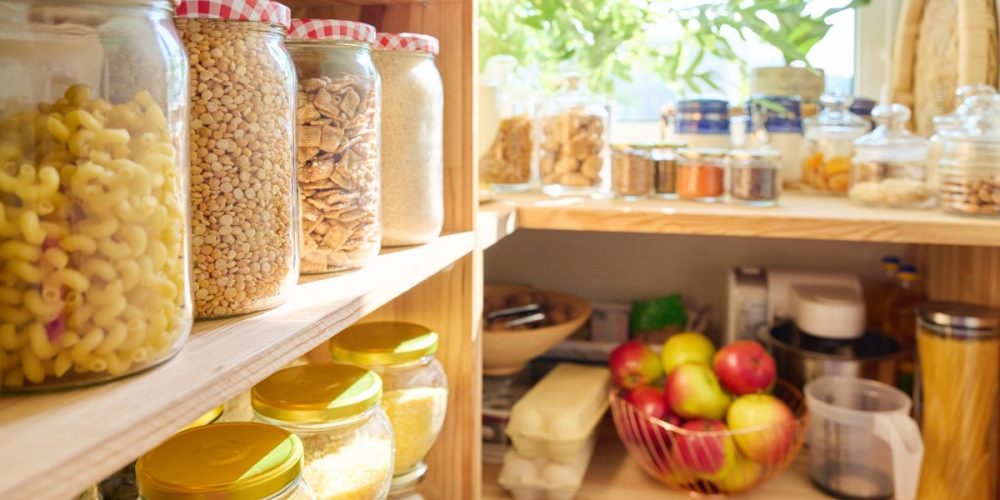
Calorie-dense staples like rice, dried pasta, and beans form the foundation of any deep pantry, providing the bulk of stored energy at the lowest cost per calorie. These foods are inexpensive, store for years when kept properly, and form the base of countless meals your family likely already eats regularly.
Protein deserves particular attention because it’s often underrepresented in basic stockpiles. Protein-rich foods like lentils and beans are essential for strength and are frequently lacking in pre-made emergency kits, which tend to be calorie-heavy and protein-light. Canned fish, peanut butter, and dried legumes all provide affordable, shelf-stable protein that should make up a meaningful portion of your pantry depth.
Preserved fruits and vegetables round out the nutritional picture and prevent the kind of nutrient gaps that a pure grain-and-protein pantry would create over an extended period. Canned and freeze-dried fruits and vegetables provide vital vitamins and fiber, and they offer something equally important during a genuinely stressful period: a taste of normalcy. A pantry of plain rice and beans is sustaining but psychologically grim after a few weeks. A pantry that includes canned peaches, frozen berries, or a jar of good pasta sauce makes the same situation considerably more bearable.
Storage and Rotation: Making the Pantry Actually Work
A deep pantry only functions correctly if the food inside it gets used and replaced on a rolling basis. This is where the concept separates from simple hoarding, and where most of the long-term discipline lives.
The guiding principle is FIFO: first in, first out. Always eat your oldest staple food first, and place newly purchased items behind older ones on the shelf rather than in front. In order for the deep pantry concept to work, it has to stay deep, which means that as you eat down into your stock, you replenish it on your next shopping trip to keep your buffer at or above your target depth.
Done correctly, you should never actually run out of staple foods, and nothing in your pantry should be older than your target depth allows. If you’re maintaining a pantry that never falls below two weeks of food, nothing in it should end up more than a month or so old. The deeper your pantry grows, the more important strict FIFO discipline becomes, since a six-month pantry with poor rotation habits can easily end up with forgotten items well past their best-quality window.
Practical storage matters as much as the rotation habit. Keep pantry staples in a cool, dry, dark location away from temperature swings, ideally below 72 degrees. Airtight containers extend the shelf life of rice, pasta, and dried legumes substantially compared to their original packaging, and labeling items with purchase dates removes any guesswork about what needs to be used first.
Beyond Storage: Skills That Make a Deep Pantry More Resilient
The most important asset in a preparedness plan isn’t stored in a can. It’s the household’s actual know-how, and building a deep pantry pairs naturally with a handful of skills that make the stored food considerably more useful in practice.
Learning basic food preservation, such as canning seasonal produce or freezing batch-cooked meals, extends what your pantry can hold beyond what you buy directly off a shelf. Practicing stock rotation regularly, rather than treating it as a one-time setup task, keeps the system honest and prevents the slow drift into forgotten, expired inventory that undermines the entire concept. And building basic cooking confidence with pantry staples like dried beans, rice, and canned goods ensures that when the pantry actually needs to be relied upon, your household already knows how to turn those ingredients into meals you’ll want to eat.
The Bottom Line
A deep pantry is one of the most practical and accessible forms of household resilience available, and it requires neither a large budget nor a dramatic shift in how you shop and cook. Build it gradually through copy-canning, focus on foods your household genuinely eats, prioritize a balance of calories, protein, and nutrition rather than calories alone, and maintain strict rotation discipline so nothing goes to waste.
Done well, a deep pantry becomes background infrastructure rather than a project you have to think about constantly. It sits quietly in your kitchen, gets used and replenished as part of your normal routine, and gives your household a genuine buffer against the kind of disruptions that are becoming more common rather than less. That’s the entire point of the concept, and it’s a habit worth building one extra can at a time.