

Let’s start with some honest context. Following the USDA’s 2026 food plan reports, a family of four should budget at least $263 per week under the Thrifty Plan. Getting to $150 means going well below those benchmarks.
Feeding a family of four well on $150 a week is achievable with a focused ingredient list, five planned dinners, and a system that turns leftovers into lunches rather than waste. The meals here are built around affordable proteins, pantry staples, and seasonal produce, with a shopping list that keeps overlap high and waste close to zero.
The good news is that with the right five dinners and a clear shopping list, it’s not only doable, it can produce meals your family actually looks forward to.
This plan covers five dinners for a family of four, with each dinner designed to produce enough for leftovers the next day’s lunch. Breakfasts are handled by a rotating rotation of oatmeal, eggs, and toast, which costs very little and requires no planning beyond keeping the basics stocked.
The recipes below are designed specifically around ingredient overlap and affordability, and written to be realistic for a weeknight kitchen rather than a weekend project.
How This Plan Is Built
Every protein in this plan appears across at least two meals. The chicken thighs bought for Tuesday’s dinner also power Wednesday’s soup using the bones and any leftover meat. The dried lentils cooked on Monday show up again in a different form on Thursday. The eggs that go into Friday’s fried rice were also used for Monday’s breakfast. Buying ingredients that can do more than one job is what keeps a $150 grocery list from feeling like a deprivation exercise.
Pantry staples, rice, pasta, canned tomatoes, olive oil, and dried spices, are assumed to be at least partially on hand from previous shops or built up over time. The shopping list below accounts for a realistic mid-pantry situation rather than assuming either a fully stocked kitchen or an empty one.
The Shopping List
This list is built around national average grocery prices in 2026, buying store brands wherever available. Totals will vary by location and store.
Proteins:
- 3 lbs bone-in skin-on chicken thighs (~$6.00)
- 1 lb dried green or brown lentils (~$2.00)
- 1 dozen eggs (~$4.00)
- 1 lb ground beef 80/20 (~$6.00)
- 2 cans chickpeas (~$2.00)
Produce:
- 1 bag carrots 2 lb (~$1.50)
- 1 head celery (~$1.80)
- 3 medium onions (~$1.50)
- 1 bulb garlic (~$0.80)
- 1 bag baby spinach (~$3.00)
- 2 lbs potatoes (~$2.50)
- 1 can diced tomatoes (~$1.20)
- 1 lemon (~$0.60)
- 1 bunch fresh thyme or dried (~$1.50)
- 2 bell peppers (~$2.00)
- 1 lime (~$0.50)
Dairy:
- 1 block cheddar cheese (~$4.50)
- 1 small container sour cream (~$2.50)
Pantry top-ups:
- 1 bag white or brown rice 5 lb (~$4.00)
- 1 box pasta (~$1.50)
- 1 can crushed tomatoes (~$1.80)
- 1 can coconut milk (~$2.00)
- 1 loaf sandwich bread (~$3.00)
- Oats, if needed (~$3.50)
- Olive oil, if needed (~$5.00)
- Butter, if needed (~$4.00)
Approximate total: $68 to $78 for ingredients above
The remaining $70 to $82 of the $150 budget covers household staples (milk, coffee, snacks, condiments), top-ups on spices and pantry items already partially used, and any variations based on local pricing.
The Weekly Meal Plan for a Family of 4 Under $150
Monday: One-Pot Red Lentil and Coconut Soup
This is the meal that sets the week up. It’s quick, deeply warming, and costs very little to make. A big pot serves four generously for dinner with enough left for two or three lunches the following day. Red lentils break down as they cook and thicken the broth naturally, which means no blending required and a silky, satisfying texture without any cream.
Serves: 4 with leftovers Time: 35 minutes
Ingredients:
- 1½ cups dried red lentils, rinsed
- 1 can coconut milk
- 1 can diced tomatoes
- 1 onion, diced
- 3 garlic cloves, minced
- 2 carrots, peeled and diced
- 1 tsp ground cumin
- 1 tsp smoked paprika
- ½ tsp turmeric
- 4 cups vegetable or chicken broth (or water with a stock cube)
- 2 tbsp olive oil
- Salt and pepper to taste
- Juice of half a lemon to finish
Method:
- Heat the olive oil in a large pot over medium heat. Add the onion and carrots and cook for five minutes until softened.
- Next, add the garlic and spices and stir for thirty seconds until fragrant. Pour in the lentils, diced tomatoes, coconut milk, and broth.
- Bring to a gentle boil, then reduce to a simmer and cook uncovered for twenty to twenty-five minutes, stirring occasionally, until the lentils have broken down and the soup has thickened.
- Finally, squeeze in the lemon juice, season to taste, and serve with bread on the side.
Budget note: This pot costs roughly $4 to $5 in ingredients and feeds four people comfortably. The leftovers reheat beautifully with a splash of water to loosen the consistency.
Tuesday: Roasted Chicken Thighs with Potatoes and Carrots
This is the centrepiece dinner of the week, and it earns its place not just as a meal but as the foundation of Wednesday’s soup. Roasting the chicken thighs over a bed of potatoes and carrots means the vegetables absorb all the rendered fat and pan juices as they cook, producing a genuinely one-pan dinner with almost no cleanup. Save the bones after dinner.
Serves: 4 Time: 55 minutes active, mostly hands-off
Ingredients:
- 6 bone-in skin-on chicken thighs
- 1½ lbs potatoes, cut into chunks
- 3 carrots, cut into batons
- 1 onion, cut into wedges
- 4 garlic cloves, unpeeled
- 1 tsp smoked paprika
- 1 tsp dried thyme
- 2 tbsp olive oil
- Salt and black pepper
Method:
- Preheat the oven to 425°F. Meanwhile, toss the potatoes, carrots, and onion wedges with one tablespoon of olive oil, salt, and pepper, and spread across a large roasting tray.
- Rub the chicken thighs with the remaining olive oil, smoked paprika, thyme, salt, and pepper, and place on top of the vegetables skin-side up.
- Scatter the unpeeled garlic cloves around the tray. Roast for 40 to 45 minutes until the chicken skin is deeply golden and crisp and the vegetables are tender and caramelized at the edges.
- Squeeze the roasted garlic from its skins over the vegetables before serving.
Budget note: Save every bone and skin from this dinner. They go straight into a pot of water tonight or tomorrow morning for Wednesday’s soup stock.
Wednesday: Leftover Chicken and Vegetable Soup
This is where Tuesday’s dinner pays a second dividend. The chicken bones, simmered with aromatics, produce a stock that tastes genuinely homemade, and any meat left on the bones shreds into the finished soup. This meal costs almost nothing in new ingredients because it’s built almost entirely from what’s already in the house.
Serves: 4 Time: 1 hour 30 minutes (mostly unattended)
Ingredients:
- Bones and skin from Tuesday’s chicken thighs
- 1 onion, halved
- 2 celery stalks, roughly chopped
- 2 carrots, roughly chopped
- Any leftover roasted vegetables from Tuesday (optional)
- 1 cup small pasta or egg noodles
- 2 garlic cloves
- 1 bay leaf
- Salt, pepper, and a handful of fresh or dried thyme
- Handful of spinach to stir in at the end
Method:
- Place the chicken bones in a large pot and cover with cold water by at least two inches.
- Add the onion, celery, carrot, garlic, bay leaf, and thyme. Bring to a gentle boil, then reduce to a simmer and cook uncovered for one hour.
- Pick out the bones and remove any usable meat from them, then set it aside. Discard the solids.
- Add the pasta or noodles and any leftover vegetables, and simmer until the pasta is just cooked.
- Stir in the reserved chicken meat and a handful of spinach. Season generously with salt and pepper. Serve immediately with bread.
Budget note: The entire new ingredient cost for this soup is essentially the pasta, which costs cents per serving. This is one of the highest-value meals of the week.
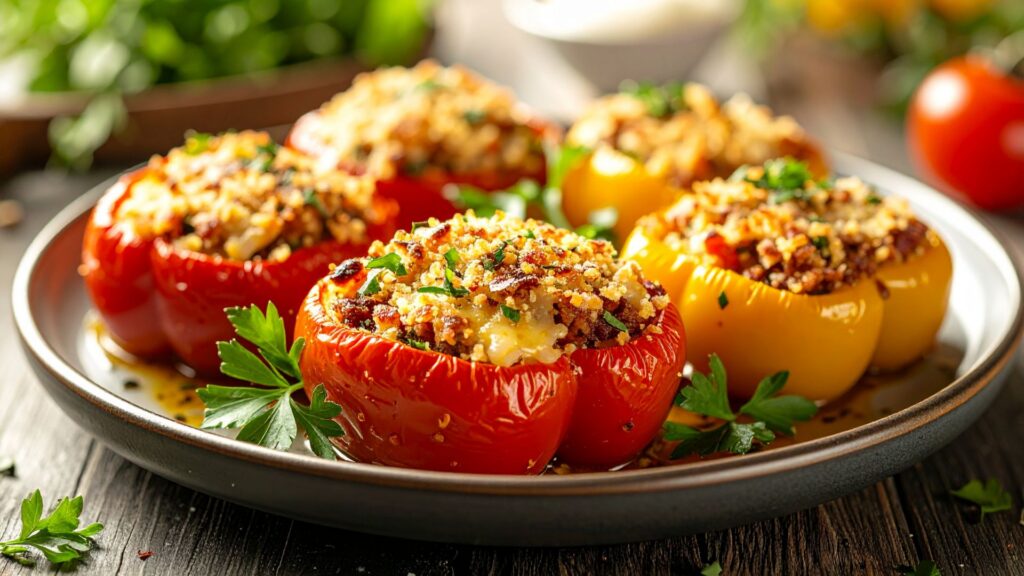
Thursday: Beef and Lentil Stuffed Peppers
This one takes a little more hands-on time than the others, but it’s the kind of dinner that earns its place on the table. Ground beef stretched with lentils fills four bell peppers generously, which means everyone gets a complete, satisfying meal at well under a dollar per serving in protein costs. The lentils absorb the beef’s flavor as they cook together and add a hearty texture that makes the filling go considerably further than beef alone would.
Serves: 4 Time: 55 minutes
Ingredients:
- 4 bell peppers, any color
- ½ lb ground beef
- ½ cup dried green lentils, rinsed (or 1 can, drained)
- 1 can crushed tomatoes
- 1 small onion, finely diced
- 2 garlic cloves, minced
- 1 tsp cumin
- 1 tsp smoked paprika
- ½ cup cooked rice (use leftover from earlier in the week if available)
- 1 cup shredded cheddar cheese
- 2 tbsp olive oil
- Salt and pepper
Method:
- Preheat the oven to 375°F. If using dried lentils, simmer in water for fifteen minutes until just tender, then drain.
- Slice the tops off the bell peppers and remove the seeds and membranes. Place in a baking dish.
- Heat the olive oil in a pan over medium heat, add the onion and cook for four minutes, then add the garlic and cook for another thirty seconds. Add the ground beef and break it up as it browns, about five minutes.
- Stir in the lentils, crushed tomatoes, cumin, paprika, and rice. Season well and cook together for five minutes.
- Spoon the filling generously into each pepper, top with shredded cheddar, and bake for thirty minutes until the peppers are tender and the cheese is golden and bubbling.
Budget note: Stretching half a pound of beef with lentils and rice reduces the protein cost of this dinner by roughly half without anyone noticing the difference in flavor or satisfaction.
Friday: Chickpea Shakshuka with Crusty Bread
Friday night calls for something that feels a little special without requiring a lot of effort or expense, and shakshuka fits that brief perfectly. Eggs poached directly in a spiced tomato and pepper sauce is one of the most satisfying one-pan dinners available, and adding a can of chickpeas makes it filling enough for a family meal rather than a brunch dish. It’s also one of the fastest dinners of the week, ready in well under thirty minutes.
Serves: 4 Time: 25 minutes
Ingredients:
- 1 can chickpeas, drained and rinsed
- 1 can diced tomatoes
- 2 bell peppers, sliced
- 1 onion, diced
- 3 garlic cloves, minced
- 6 eggs
- 1 tsp smoked paprika
- 1 tsp cumin
- ½ tsp chili flakes (adjust to taste)
- 2 tbsp olive oil
- Salt and pepper
- Handful of spinach
- Crumbled feta to finish (optional, if budget allows)
- Good crusty bread for serving
Method:
- Heat the olive oil in a wide, deep pan over medium heat. Add the onion and bell peppers and cook for six minutes until softened.
- Add the garlic, paprika, cumin, and chili flakes and stir for thirty seconds.
- Next, pour in the diced tomatoes and chickpeas, season well, and stir to combine. Bring to a simmer and cook for eight minutes until the sauce has thickened slightly. Stir in the spinach until wilted.
- Use a spoon to make six wells in the sauce and crack an egg into each one. Cover the pan with a lid and cook on low heat for 5-7 minutes until the whites are just set and the yolks are still soft.
- Serve directly from the pan at the table with plenty of bread to scoop it up.
Budget note: This dinner costs approximately $5 to $6 in total for the whole pan. It’s also the kind of meal that makes a $150 grocery week feel genuinely indulgent rather than restricted.
Making the $150 Work: The Habits That Matter Most
Having five good recipes is only part of what makes a $150 week work. The habits around how you shop and cook matter just as much as what’s on the menu.
Buying store brands across every category on the shopping list above saves roughly 20% – 30% compared to name brands on items like canned tomatoes, pasta, rice, and olive oil, with no meaningful difference in how the food turns out. Cooking the dinners in the sequence above keeps ingredient overlap high and waste close to zero, since carrots, onions, garlic, and spinach appear across multiple meals rather than being bought for a single dish. On top of that, treating leftovers as planned lunches rather than optional extras extends the per-meal value of every dinner on this list considerably.
The Bottom Line
A $150 grocery week for a family of four requires careful planning. Five dinners with intentional ingredient overlap, a shopping list built around what those dinners actually require, and a commitment to using leftovers deliberately rather than hopefully produces a week of genuinely good food at a cost that leaves room in the budget for the other things a household needs. The recipes above are a starting point, not a fixed formula. Once you understand the logic behind how they’re structured, building your own week around the same principles becomes straightforward.