Have you ever felt a particular satisfaction opening a well-stocked pantry in the middle of January? Imagine pulling out a can of tomatoes and a bag of lentils, and knowing that dinner is already sorted. That pantry didn’t happen by accident. It was probably built during fall, because fall is when canned goods go on sale in a way that genuinely makes stocking up so worth it.
Fall is when grocery stores run their deepest promotions on canned goods, driven by the cooking season shift and the lead-up to the holidays. September brings sales on canned soups, pastas and pantry staples. Meanwhile, October kicks off baking season discounts including canned pumpkin and tomatoes. Additionally, November goes big on everything ahead of Thanksgiving. If you’re going to stock up on canned goods once a year, this is the window to do it.
Most of us don’t think much about grocery store sale cycles, but they’re real and remarkably predictable. As fall approaches, comfort foods go on sale. Grocery stores know that cooking habits shift in fall, and they lean into that shift with promotions designed to get you stocking up. The frugally savvy move is to stock up intentionally rather than reactively, buying what you’ll actually use rather than whatever happens to catch your eye.
Why the Timing Actually Makes Sense
The reason fall’s canned goods sales exist isn’t random generosity on the part of supermarkets. It’s a combination of factors that align every year in this particular season.
First, demand for hearty, warming foods picks up sharply as the weather cools, and canned goods sit at the center of that shift. Soups, stews, curries, braises, and baked goods all lean heavily on canned tomatoes, beans, broth, and pumpkin in ways that summer cooking simply doesn’t. Stores know this and front-load their promotional calendars accordingly.
Second, the holiday cooking season that begins in earnest with Thanksgiving creates a concentrated period of high consumer spending on pantry staples, and stores compete aggressively on those staples to drive foot traffic. November is widely considered the absolute best month to stock up on holiday baking essentials like flour, sugar, and canned goods because grocery stores compete heavily for Thanksgiving shoppers with steep discounts. That competition starts earlier than most people realize, with promotional cycles beginning in September and building through October.
Third, manufacturers often offer promotional pricing to retailers in fall to move large volumes of product before the year ends, and those manufacturer deals translate into sale prices on the shelf. The system is predictable enough that experienced budget shoppers plan their annual pantry stock-up specifically around the September to November window.
What to Actually Buy (And How Much)
Knowing a sale is coming is only useful if you know what to buy with it. The goal isn’t to fill your pantry with things you might use. It’s to stock up on things you definitely will use, at prices that are meaningfully lower than what you’ll pay in January. Here’s how to think about each major category.
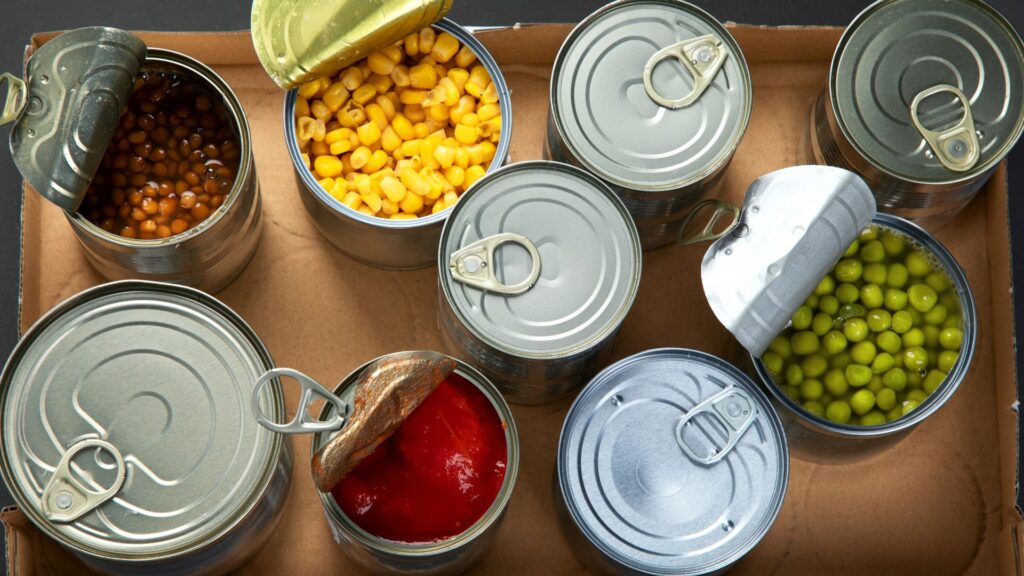
Canned tomatoes are probably the most useful single item you can stock up on at fall’s sale prices. Whole peeled tomatoes, diced tomatoes, and crushed tomatoes form the base of an extraordinary number of meals from pasta sauces to soups, braises, curries, and shakshuka.
They keep for two to five years unopened, and you will use every can you buy. When you see canned tomatoes on a strong promotion in September or October, buying a case of twelve is not overkill. It’s good planning.
Canned beans are equally worth stocking in bulk. Black beans, chickpeas, cannellini beans, and kidney beans are all workhorses across the kinds of fall and winter meals you’ll be cooking for the next five months.
A case of each variety that appears in your regular cooking provides the convenience of canned beans at a price closer to dried beans, particularly when you catch the right sale. Look for the store brand, which is typically identical in quality to the name brand at considerably lower cost.
Canned soups and broths deserve more attention during September’s comfort food promotions specifically. A well-stocked supply of good chicken broth, vegetable broth, and a variety of hearty canned soups for the days when cooking from scratch isn’t happening is one of the most practical things a home pantry can hold. Buy broth in the largest format available, since the price per ounce drops significantly in the larger cartons and boxes.
Canned pumpkin is worth picking up in October before the holiday baking wave drives both demand and prices up. A few cans of pure pumpkin puree, not pumpkin pie filling (which contains added sugar and spices), give you flexibility for soups, oatmeal, pasta dishes, and baked goods across fall and into winter.
Canned fish, particularly tuna and sardines, sees reliable promotional pricing in fall as part of the comfort food and pantry staple promotion cycles. Stock up on tuna in water and sardines in olive oil when you see a strong deal, since both keep for two or more years and provide excellent, quick protein for lunches and simple dinners across the season.
Canned coconut milk for curries and soups is worth stocking when you see it on sale, since it’s one of those items that tends to be more expensive at smaller grocery stores and more competitively priced at large supermarkets during promotional cycles. A few cans go a long way, since most recipes use only half to a full can at a time.
The Right Way to Stock Up Without Overdoing It
There’s a version of pantry stocking that turns into clutter: buying things because they were cheap, and not because you cook with them. As a result, you’ll end up with a shelf full of items that expire before they get used. The discipline that makes fall stock-up worthwhile rather than wasteful is buying only what you reliably cook with and would buy eventually anyway.
Before you buy a single extra can, look at what you made for dinner last week and the week before. What canned goods appeared in those meals? Those are the ones worth stocking in quantity.
Meanwhile, if you’ve never cooked with a particular type of canned bean or didn’t know how to use canned pumpkin in a savory dish, a fall sale is not the right time to experiment with a case of twelve. Buy one or two and see how you use them. Stock up on what you know.
Quantity matters too. A useful mental framework is to buy enough to last until the next significant sale, which for canned goods is typically about three to four months. That puts your next major stock-up opportunity around the post-holiday clearance period in January and February, when some grocers discount remaining holiday inventory.
Buying a three to four month supply at fall’s sale prices means you’re not paying full price again until early next year, which is a genuinely meaningful saving over the course of a budget year.
A Few Practical Tips for Getting the Most Out of Fall Sales
Keep an eye on the weekly ad for your main grocery store throughout September and October. Most stores run their comfort food and canned goods promotions on a rotating basis rather than all at once, so checking the circular each week reveals which category is being featured that particular week. Apps like Flipp aggregate weekly ads from multiple stores simultaneously, which makes it easy to spot when canned tomatoes are on at one store the same week beans are promoted at another.
Store brands are worth specifically preferring over name brands for canned goods during stock-up shopping, since the quality is comparable and the price difference is most pronounced on basic pantry staples. A case of store-brand canned tomatoes at sale price can cost significantly less than a case of a premium brand at the same promotion, for a product that tastes identical in a cooked dish.
Finally, check your storage space before you shop. There’s no point buying a three-month supply of canned tomatoes if there’s nowhere to put them. A quick check of your pantry shelf space before heading to the store prevents the frustrating outcome of bringing home a case of cans that have to live in a bag on the kitchen floor because there’s no room on the shelf.
The Bottom Line
Fall’s canned goods sales are one of the most reliable and genuinely useful budget opportunities of the grocery year, and they happen every year whether you take advantage of them or not.
Stocking up on canned tomatoes, beans, broth, pumpkin, and fish during September, October, and November’s promotional cycles means building a pantry that carries you through winter at prices you won’t see again until spring. Buy what you actually cook with, buy enough to last until the next sale, store it properly, and let the pantry do the heavy lifting through the coldest months of the year.
Frequently Asked Questions (FAQ’s)
When is the best time to stock up on canned goods? September through November is the strongest window for canned goods promotions in the US, driven by the comfort food cooking season and the lead-up to the holidays. September tends to favor soups and pantry staples, October features baking season items, and November goes deep on everything ahead of Thanksgiving.
How long do canned goods actually last? Most canned goods are safe to eat well beyond their best-by date, which is a quality rather than safety indicator. Low-acid canned foods like beans, vegetables, and broth typically maintain best quality for two to five years. High-acid items like canned tomatoes and fruit are best within eighteen months to two years, though they remain safe beyond that.
Is it worth buying store brand canned goods? Yes, for almost every category. Store-brand canned tomatoes, beans, broth, and vegetables are nutritionally identical to name brands and consistently taste comparable in cooked dishes. The price difference is most significant during promotional sales, making store brand the obvious choice when stocking up.
How much should I buy when stocking up? A useful target is enough to last until the next major sale, typically three to four months. For canned tomatoes used twice a week, that might be twenty to twenty-four cans. For coconut milk used monthly, four to six cans is plenty. Match your quantity to your actual cooking frequency rather than buying the maximum available.
What canned goods are not worth stocking up on? Canned goods you don’t regularly cook with, anything you’re buying speculatively rather than from habit, and items you’ve never tried before are not worth stocking in quantity regardless of the sale price. A single can to try something new makes sense. A case of twelve doesn’t.