The best fall root vegetables for budget cooking are potatoes, carrots, parsnips, beets, turnips, rutabagas, and celeriac. All are inexpensive, highly nutritious, and store for weeks with minimal effort. Roasting at high heat is the simplest way to bring out their natural sweetness and make them genuinely delicious.
Root vegetables don’t get the attention they deserve, and the reason is mostly aesthetic. They’re not photogenic in the way that a bowl of pasta or a perfectly seared steak is. They’re muddy, irregular, and occasionally difficult to tell apart in a dimly lit produce section. But for a home cook who cares about eating well without overspending, fall root vegetables are one of the most valuable ingredients available at any grocery store or farmers market right now, and they’ve been quietly carrying budget kitchens through cold months for centuries.
The economics are genuinely compelling. Root vegetables are consistently among the cheapest produce options per pound, they store for weeks or months with almost no effort, they’re packed with fiber, vitamins, and complex carbohydrates that keep you full, and they become deeply sweet and flavorful when cooked using the simple methods that fall naturally calls for. A bag of carrots, a few pounds of potatoes, a bunch of beets, and a couple of parsnips costs very little and provides the foundation for an entire week of satisfying, warming meals.
This guide covers the key fall root vegetables worth knowing, how to store them properly to get maximum value from each purchase, and the cooking approaches that produce the best results for the least effort.
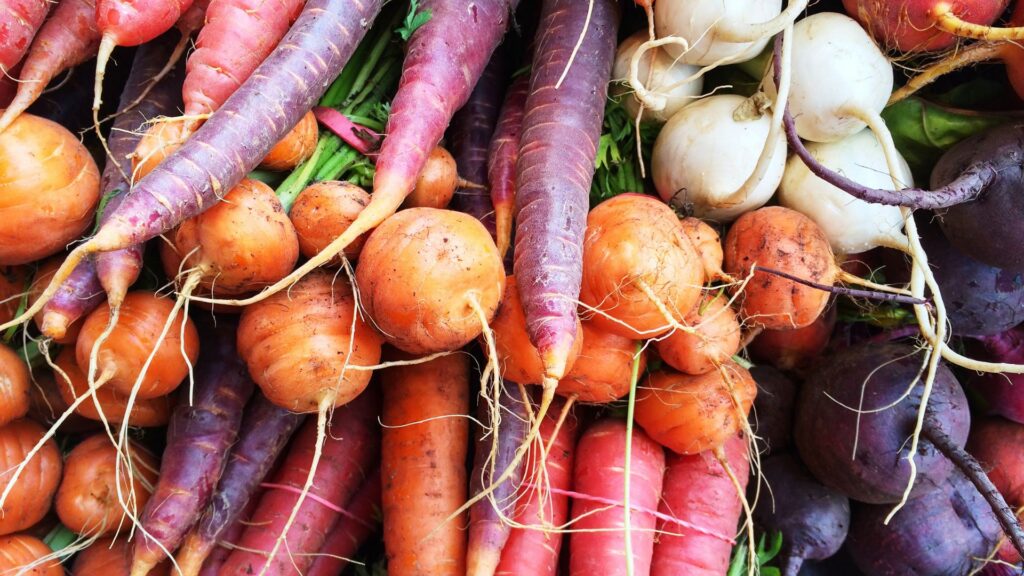
The Fall Root Vegetables Worth Buying Every Week
Potatoes are the foundation of budget root vegetable cooking and the single cheapest source of filling calories in the entire produce section. A five-pound bag costs very little, stores for weeks in a cool dark place, and produces more meal variety than almost any other single ingredient. Roasted, mashed, turned into soup, baked whole, or sliced and layered into a gratin, potatoes work across more applications than most cooks fully explore.
One important storage note: Keep potatoes away from onions. Both release gases that accelerate the other’s spoilage when stored together, and separating them meaningfully extends how long both last.
Carrots are close behind on value and arguably the most versatile root vegetable available in terms of how many different cooking contexts they fit. Raw as a snack, roasted until caramelized, simmered into soup, grated into slaws and salads, or braised alongside a budget cut of meat, carrots are genuinely useful in almost every cooking scenario. They also store well in the refrigerator for several weeks without significant quality loss, which makes them a reliable staple to buy in larger bags when the price is right.
Parsnips look like pale carrots and behave similarly in cooking, but they have a sweeter, nuttier flavor that intensifies considerably when roasted. They’re often overlooked in the produce section, which keeps prices low. Roasted parsnips tossed with olive oil, a pinch of salt, and a touch of honey or maple syrup make an excellent side dish that costs almost nothing to prepare. They also puree beautifully into soups and work well alongside potatoes in a mash.
Beets are polarizing, but for cooks who like them, they’re an excellent fall value. They roast well, keep in the refrigerator for weeks after cooking, and add a genuinely striking color and earthy sweetness to grain bowls, salads, and soups. One practical tip that saves both money and effort: don’t discard the beet greens. The tops of fresh beets are entirely edible and work exactly like Swiss chard when sautéed with garlic and olive oil. Buying beets with their greens attached is effectively buying two vegetables for the price of one.
Turnips and rutabagas are among the most underpriced vegetables in any fall produce section, largely because they’re unfamiliar to many home cooks. Both have a mild, slightly peppery flavor that mellows considerably with cooking, and both work well wherever you’d use potatoes, including in soups, stews, mashes, and roasted medleys. Rutabagas in particular have a pleasant sweetness when roasted that makes them a genuinely good budget substitute for more expensive winter squash in certain applications.
Celeriac, also sold as celery root, is the most homely-looking vegetable on this list and one of the most underrated. Beneath its rough, knobbly exterior is a vegetable with a clean, celery-like flavor and a texture that works beautifully both raw and cooked. Grated raw into a remoulade salad dressed with mustard and mayonnaise, it’s a classic French preparation that costs almost nothing. Roasted or simmered into soup, it adds a subtle savory depth that’s hard to achieve with most other budget vegetables.
Storage: Where Most of the Value Is Actually Won or Lost
The frugal case for root vegetables rests not just on their low purchase price but on their exceptional shelf life when stored correctly. A vegetable that lasts three weeks in your kitchen at a low per-pound price is better value than a more expensive vegetable that wilts in three days. Root vegetables win this comparison comprehensively, but only if they’re stored the right way.
The general rule for most root vegetables is cool, dark, and well-ventilated. A pantry or basement shelf is ideal. The refrigerator works for carrots, beets, turnips, and parsnips, where the crisper drawer provides the right balance of cool temperature and moderate humidity. Potatoes and onions should stay out of the refrigerator entirely: the cold converts potato starch to sugar and affects both texture and flavor, and onions stored in the refrigerator become soft and strong-flavored faster than those kept at room temperature.
Don’t wash root vegetables before storing them. Washing removes the natural coating that helps them retain moisture, and any residual dampness accelerates spoilage. Wash them immediately before cooking rather than when they come home from the store.
The Cooking Method That Unlocks the Most Flavor for the Least Effort
Roasting is the single most effective cooking method for fall root vegetables, and it’s worth understanding why rather than just following the instruction. High oven heat, typically between 400°F and 425°F, draws moisture out of the cut surfaces of the vegetables and drives the Maillard reaction, the same browning process responsible for the flavor development in seared meat.
Root vegetables that taste mild and starchy when boiled develop a concentrated sweetness and caramelized depth when roasted that transforms them into something genuinely delicious with almost no effort beyond cutting and tossing in oil.
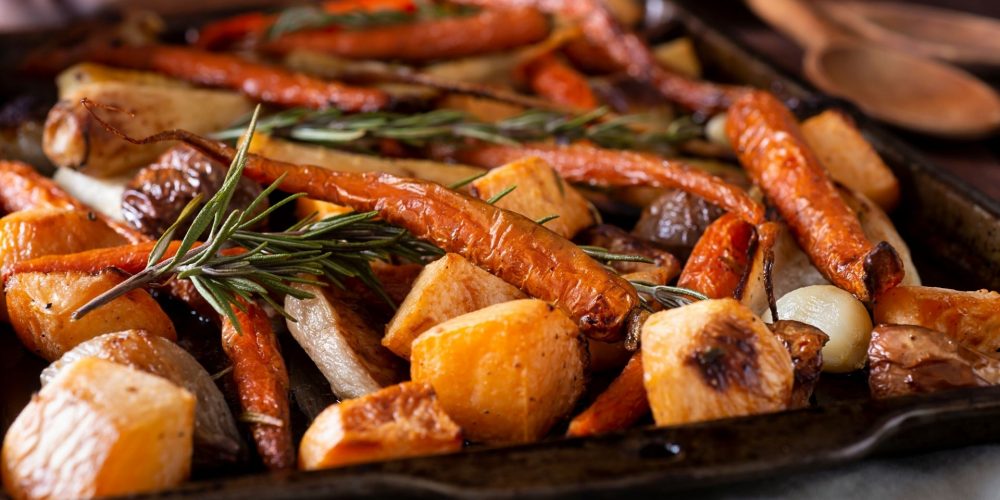
The practical approach is a sheet pan roasted medley, a mix of whatever root vegetables you have, cut into roughly equal-sized pieces, tossed with olive oil, salt, and whatever herbs or spices suit the meal, and roasted at 400°F until golden and tender. This method is endlessly variable, produces a different result every time depending on which vegetables and seasonings you use, and works as a side dish, a grain bowl base, or the foundation of a warm autumn salad. It also scales effortlessly: a single sheet pan feeds two, two pans feed four, and the leftovers reheat well the next day.
The Bottom Line
Fall root vegetables are one of the most consistently overlooked value opportunities in budget cooking. They’re cheap, nutritious, long-lasting, and genuinely delicious when treated with the right cooking methods. Building even two or three meals a week around potatoes, carrots, parsnips, beets, or turnips produces meaningful grocery savings without any sacrifice in the quality or satisfaction of what ends up on the plate. The produce section’s least glamorous corner turns out to be one of its most rewarding, and fall is exactly the right time to start exploring it.
Frequently Asked Questions (FAQ’s)
What are the cheapest root vegetables to buy in fall? Potatoes and carrots are consistently the cheapest root vegetables per pound at any grocery store or farmers market during fall. Turnips, parsnips, and rutabagas are also very affordable and often underpriced because fewer shoppers buy them regularly.
How long do root vegetables last in the refrigerator? Carrots, beets, turnips, and parsnips keep well in the refrigerator crisper drawer for two to four weeks. Potatoes and onions should not be refrigerated and last longest stored at cool room temperature in a dark, ventilated space.
What is the best way to cook root vegetables? Roasting at 400°F to 425°F produces the best results for most root vegetables. High heat draws out moisture, caramelizes the natural sugars, and develops a depth of flavor that boiling or steaming cannot match.
Should you peel root vegetables before cooking? Not always. Carrots, beets, parsnips, and turnips can be scrubbed well and cooked with their skins on, which saves time and retains additional fiber. Potatoes and celeriac are typically peeled depending on the dish, though potato skins are perfectly edible and nutritious when roasted.
Are root vegetables healthy? Yes. Root vegetables are high in fiber, complex carbohydrates, and a range of vitamins and minerals including vitamin A in carrots and sweet potatoes, potassium in potatoes and beets, and folate in parsnips and turnips. Their complex carbohydrates digest more slowly than refined carbs, which helps sustain energy and fullness.