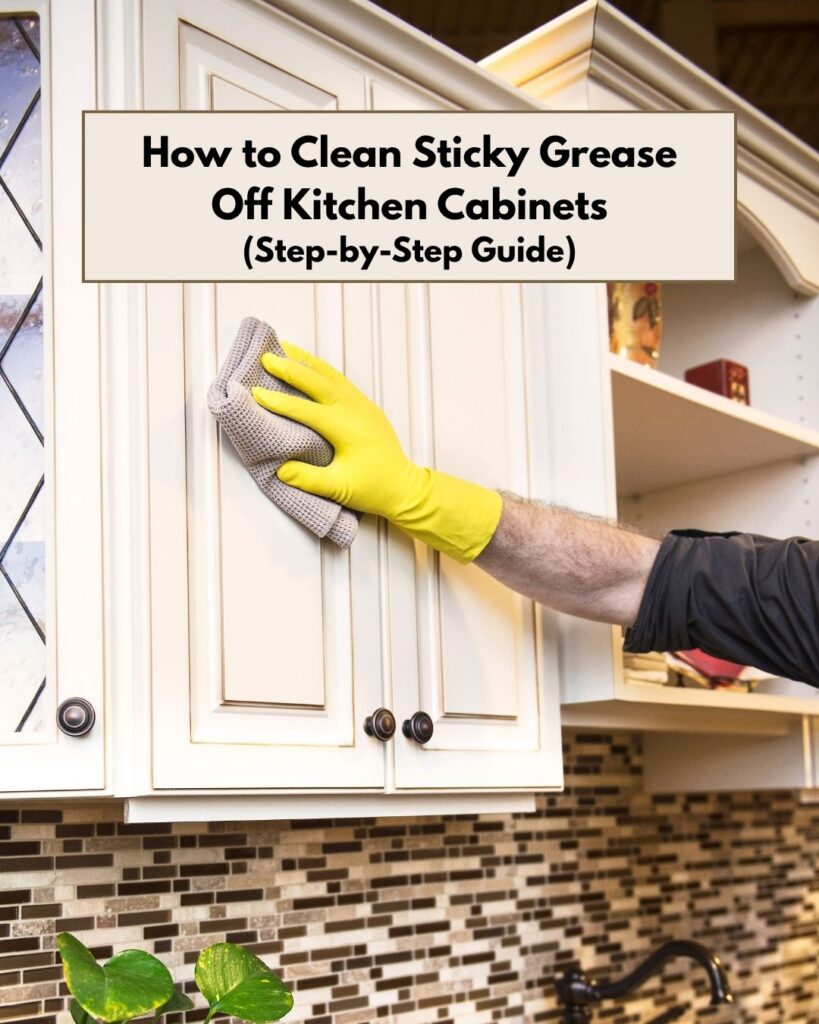
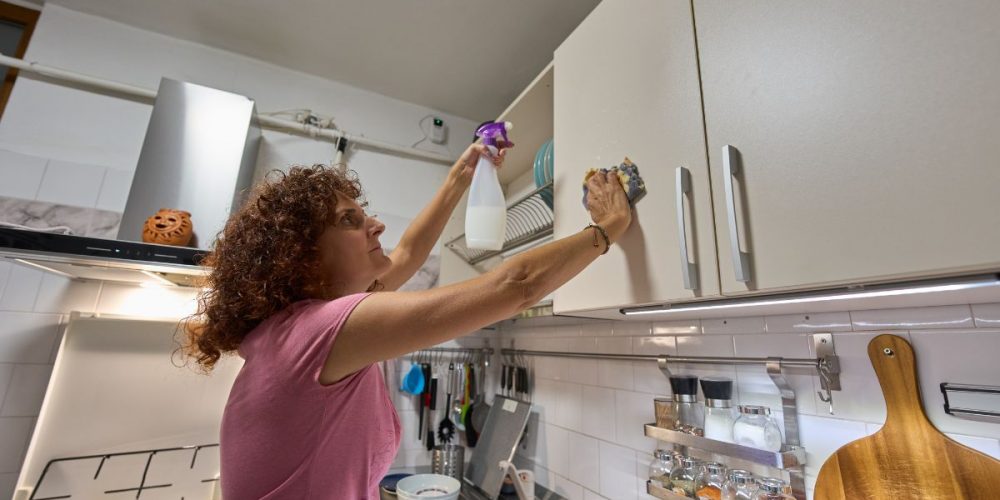
Cooking meals that you love is one of the most satisfying things you can do at home. But, with your stove’s frequent usage, it’s only natural that your kitchen’s surfaces experience grease buildup. The most effective way to clean sticky grease off kitchen cabinets is to use warm water mixed with dish soap, applied with a microfiber cloth. For tougher buildup, use baking soda or a diluted vinegar solution.
Why Kitchen Cabinets Get Sticky (And Why It’s So Hard to Remove)
If your cabinets feel tacky or grimy, you’re not imagining it. Over time, cooking releases tiny airborne grease particles that settle on surfaces. These oils mix with dust and moisture, forming a stubborn, sticky film that regular wiping won’t remove.
This buildup is especially common around stoves and cooking areas. The longer it sits, the more it hardens, eventually turning into a waxy layer that feels almost impossible to clean.
The key to removing it isn’t brute force. It’s using the right method to break down grease at a chemical level, rather than just scrubbing it around.
The Best Way to Remove Grease (Start Simple First)
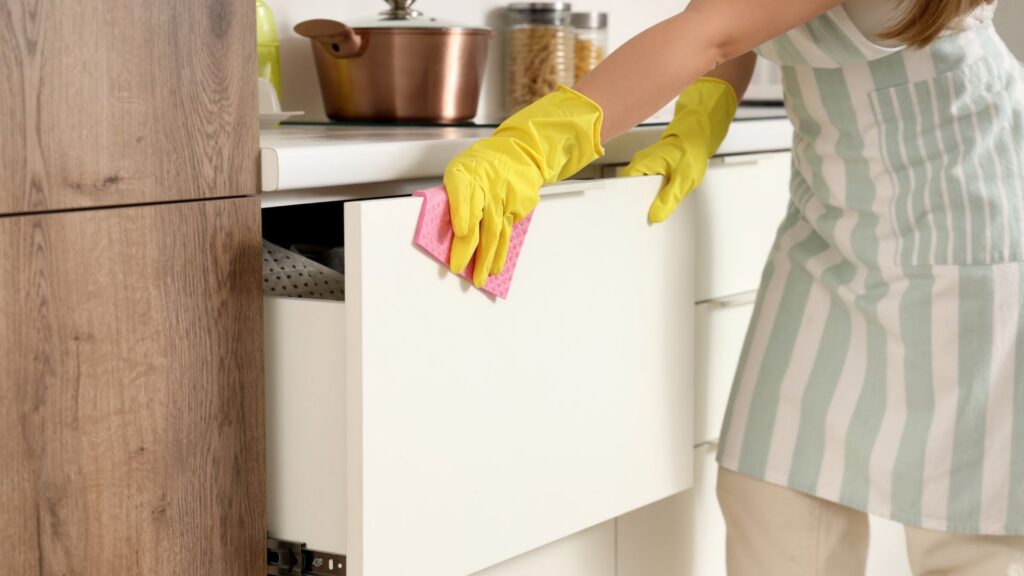
Before reaching for heavy-duty cleaners, start with the most effective and safest solution: dish soap and warm water.
Dish soap is specifically designed to break down oils using surfactants, which loosen grease from surfaces so it can be wiped away easily.
Step-by-step method:
- Mix warm water with a few drops of dish soap
- Dip a microfiber cloth into the solution
- Wring it out so it’s damp, not soaking
- Wipe cabinets from top to bottom
- Rinse with a clean damp cloth
- Dry immediately with a towel
This method alone can remove the majority of grease buildup in most kitchens, especially if the residue hasn’t hardened too much.
How to Remove Thick, Sticky Grease Buildup
If your cabinets still feel sticky after cleaning, you’re likely dealing with old, hardened grease. At this point, you need something slightly more powerful, but still safe.
Baking soda works particularly well here because it acts as a gentle abrasive. It helps lift stubborn grease without damaging most cabinet finishes when used correctly.
Here’s how to use baking soda paste:
- Mix baking soda with a small amount of water
- Create a thick paste
- Apply it to greasy areas
- Let it sit for 2–3 minutes
- Gently rub with a soft cloth
- Wipe clean with a damp cloth
- Dry thoroughly
Focus on high-contact areas like cabinet handles, edges, and spots near the stove. These tend to collect the most buildup.
Using Vinegar to Cut Through Grease Naturally
If you prefer a more natural approach, vinegar is another highly effective option. Its acidity helps dissolve grease and break down sticky residue.
However, it should always be diluted, especially on wood cabinets, to avoid damaging the finish.
Here’s the vinegar cleaning method:
- Mix equal parts white vinegar and warm water
- Add to a spray bottle
- Lightly spray cabinet surfaces
- Let sit for a few minutes
- Wipe with a soft cloth
- Follow with a damp cloth to remove residue
Vinegar works best on moderate grease buildup and can also help eliminate odors in the kitchen.
A Pro Trick: Use Heat to Loosen Grease
Here’s something many people overlook: grease hardens over time. Don’t worry though, it softens with heat. Applying gentle heat before cleaning can make a huge difference, especially for thick buildup.
Here’s how to use heat safely:
- Use a hair dryer on medium heat
- Warm the greasy area for 30–60 seconds
- Immediately wipe with warm soapy water
- Finish with a clean damp cloth
This method helps loosen stubborn grease so you don’t have to scrub aggressively, which can damage cabinet finishes.
What About Commercial Degreasers?
If DIY methods aren’t enough, commercial degreasers can be effective, but they should be used carefully.
Many contain stronger chemicals that can strip paint, dull finishes, or leave residue if used incorrectly. That’s why experts often recommend trying gentle methods first and only moving to stronger cleaners if necessary.
If you do use one:
- Always test on a hidden area first
- Follow instructions closely
- Avoid over-spraying
- Wipe and dry thoroughly
Common Mistakes That Make Grease Worse
Cleaning sticky cabinets isn’t just about what you do, it’s also about what you avoid. Some common mistakes can actually spread grease or damage your cabinets.
Avoid these mistakes:
- Scrubbing with rough sponges or abrasive pads
- Using too much water (especially on wood)
- Skipping the drying step
- Using undiluted vinegar on delicate finishes
- Cleaning with a dirty cloth (this spreads grease)
One of the biggest mistakes is trying to scrub away grease without breaking it down first. This just smears it across the surface and makes the problem worse.
How to Keep Kitchen Cabinets Grease-Free
Once your cabinets are clean, keeping them that way is much easier than doing a deep clean again.
Grease buildup happens gradually, so regular maintenance can prevent it from ever becoming sticky.
Simple prevention tips:
- Wipe cabinets weekly with a damp cloth
- Clean areas near the stove more frequently
- Use your kitchen extractor fan while cooking
- Clean spills immediately
- Do a deeper clean every 1–3 months
Regular light cleaning prevents grease from hardening into that stubborn, sticky layer in the first place.
Natural vs Chemical Cleaning: What Works Best?
There’s no one-size-fits-all answer in removing sticky grease. It’s because a major factor of it is that it depends on how bad the grease buildup is.
Natural solutions like dish soap, vinegar, and baking soda are ideal for most situations. They’re effective, affordable, and safe for everyday use.
Stronger chemical cleaners can be useful for extreme buildup, but they come with trade-offs. They can be harsher on surfaces and require more careful handling.
In most cases, a layered approach works best:
- Start with dish soap
- Move to baking soda or vinegar if needed
- Use commercial cleaners only as a last resort
Frequently Asked Questions
What is the fastest way to clean greasy cabinets?
Using warm water and dish soap is the quickest and most effective method for most grease buildup.
Can I use vinegar on wood cabinets?
Yes, but it should always be diluted and used sparingly to avoid damaging the finish.
Why are my cabinets still sticky after cleaning?
This usually means grease hasn’t been fully broken down. Try baking soda paste or repeat the cleaning process with a fresh solution.
How often should I clean kitchen cabinets?
Light cleaning weekly and deeper cleaning every 1–3 months helps prevent buildup.
Final Thoughts
Sticky grease on kitchen cabinets might feel like a nightmare to clean, but it’s actually very manageable once you understand what you’re dealing with.
The secret isn’t scrubbing harder. It’s using the right combination of heat, gentle cleaners, and technique to break down grease effectively.
Start simple with dish soap, escalate only when needed, and focus on consistency moving forward. With the right approach, your cabinets can go from sticky and dull to clean and smooth, without damaging the finish.