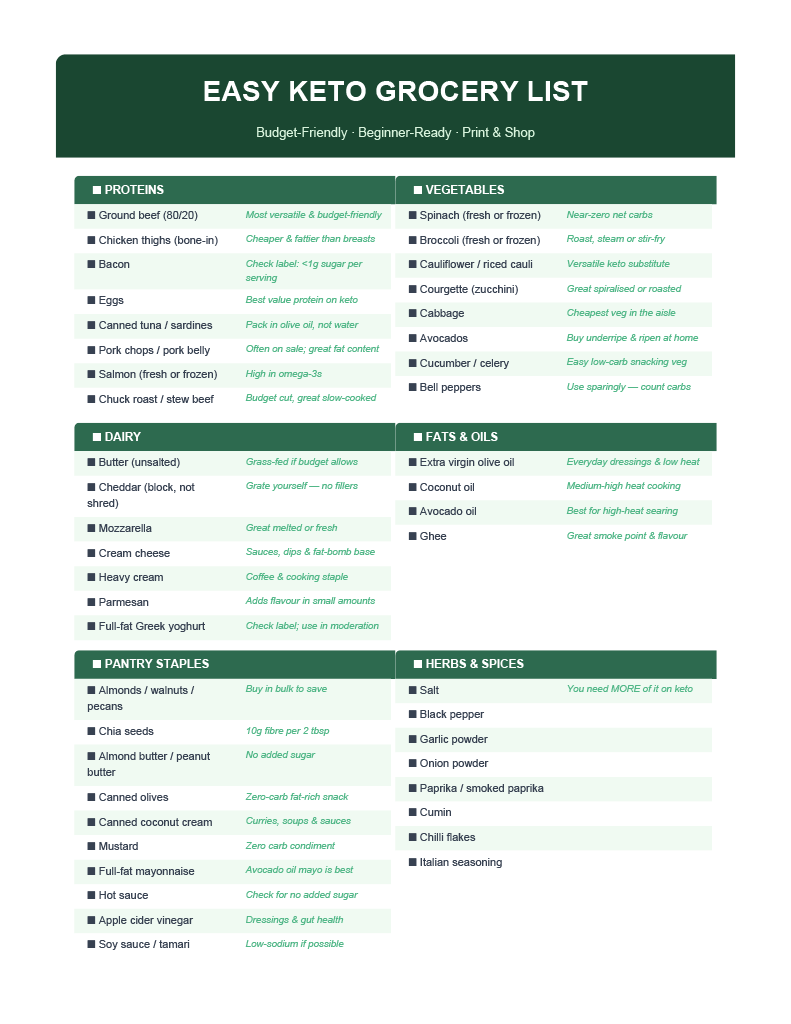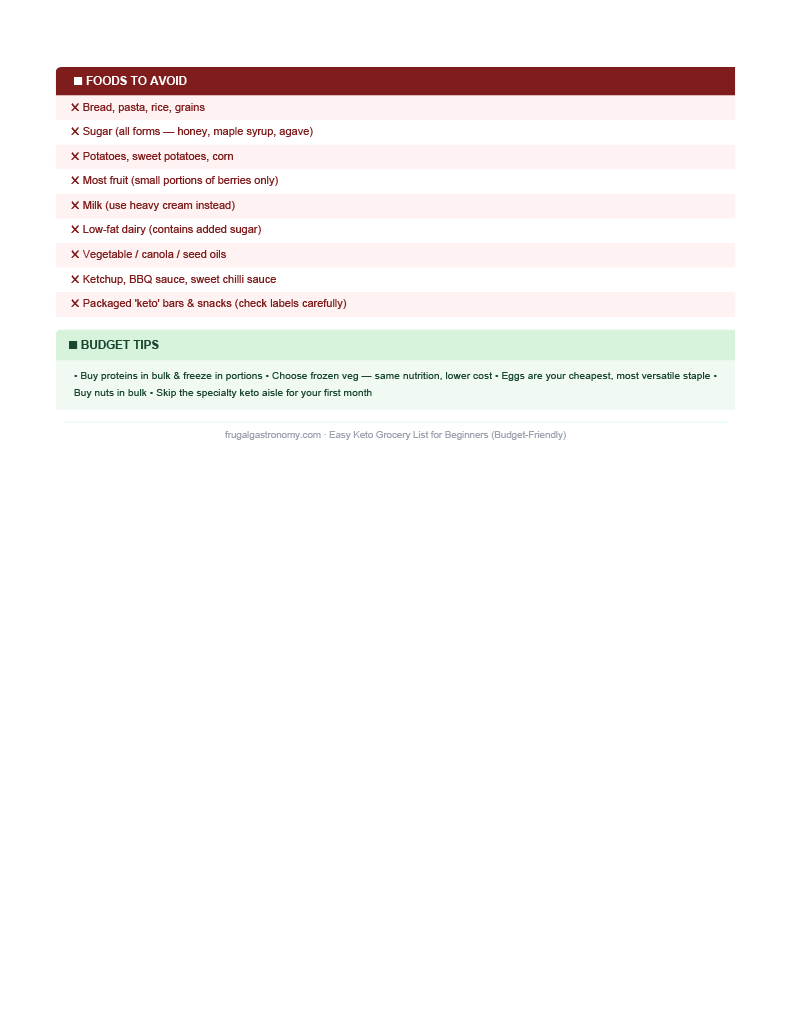
Walking into a grocery store on your first week of keto can feel genuinely overwhelming. Every aisle seems to hide carbs you didn’t account for, and the internet’s version of a “keto grocery list” often reads like a shopping haul for someone with a very generous food budget. The truth is that eating keto well doesn’t require specialty products, expensive supplements, or a weekly order from a premium grocer.
The most effective keto grocery lists are built on simple, whole foods that are naturally low in carbohydrates and widely available at any mainstream supermarket. This guide gives you exactly that, a practical, beginner-friendly list organized by category, with budget tips woven throughout so you can start keto without it quietly wrecking your finances.
What Makes a Food “Keto-Friendly”?
Before diving into the list, a quick grounding in the basics helps you shop with confidence rather than just following rules you don’t fully understand. The keto diet works by keeping carbohydrate intake low enough, typically under 20 to 50 grams of net carbs per day, that your body is forced to switch from burning glucose to burning fat for fuel. Net carbs are calculated by subtracting fibre from total carbohydrates, which is the number you’ll be tracking rather than total carbs.
Foods that are naturally high in fat, moderate in protein, and very low in carbohydrates are your foundation. Foods high in sugar, starch, or refined grains are off the table. Everything else is a label-reading exercise.

The Proteins
Protein is the easiest category to shop for on keto because virtually all unprocessed meat and fish contains zero carbohydrates. The budget tip here is counterintuitive but genuinely useful: fattier cuts of meat are not only better for keto, they’re consistently cheaper than lean cuts. This is one of the few diets where the most economical option is also the most optimal one.
Beef: Ground beef at an 80/20 fat ratio is the single most versatile and affordable protein on a keto grocery list. It works in dozens of different meals, stores well in the freezer, and provides the fat content your macros require. Chuck roast, beef short ribs, and beef stew meat are all similarly budget-friendly and excellent for slow-cooking. Save ribeye and strip steak for occasional meals rather than weekly staples.
Chicken: Bone-in, skin-on chicken thighs are the workhorse of budget keto cooking. They’re significantly cheaper than chicken breast, harder to overcook, and naturally higher in fat. Drumsticks and whole chickens (particularly rotisserie chickens, which are often priced as a loss-leader at supermarkets) are similarly great value. Chicken breast is perfectly fine on keto but is leaner, so you’ll need to compensate with fat elsewhere in the meal.
Eggs: If there’s one non-negotiable staple on this list, it’s eggs. They’re among the most affordable high-quality proteins available, genuinely versatile across breakfast, lunch, and dinner, and provide a solid combination of fat and protein in every serving. A three-egg omelette with cheese and vegetables is a complete, filling meal for very little cost.
Canned fish: Tinned tuna, salmon, and sardines are excellent budget proteins that require no cooking and have a long shelf life. Look for options packed in olive oil rather than water or sunflower oil for a better fat profile. Sardines in particular are nutritionally exceptional, high in omega-3s, calcium, and vitamin D, and among the most affordable fish options available.
Pork: Bacon, pork belly, pork chops, and pork loin are all keto-compatible and frequently on sale. Check the label on bacon specifically, as some brands add sugar to the cure, look for options with 0g or under 1g of sugar per serving.
The Vegetables
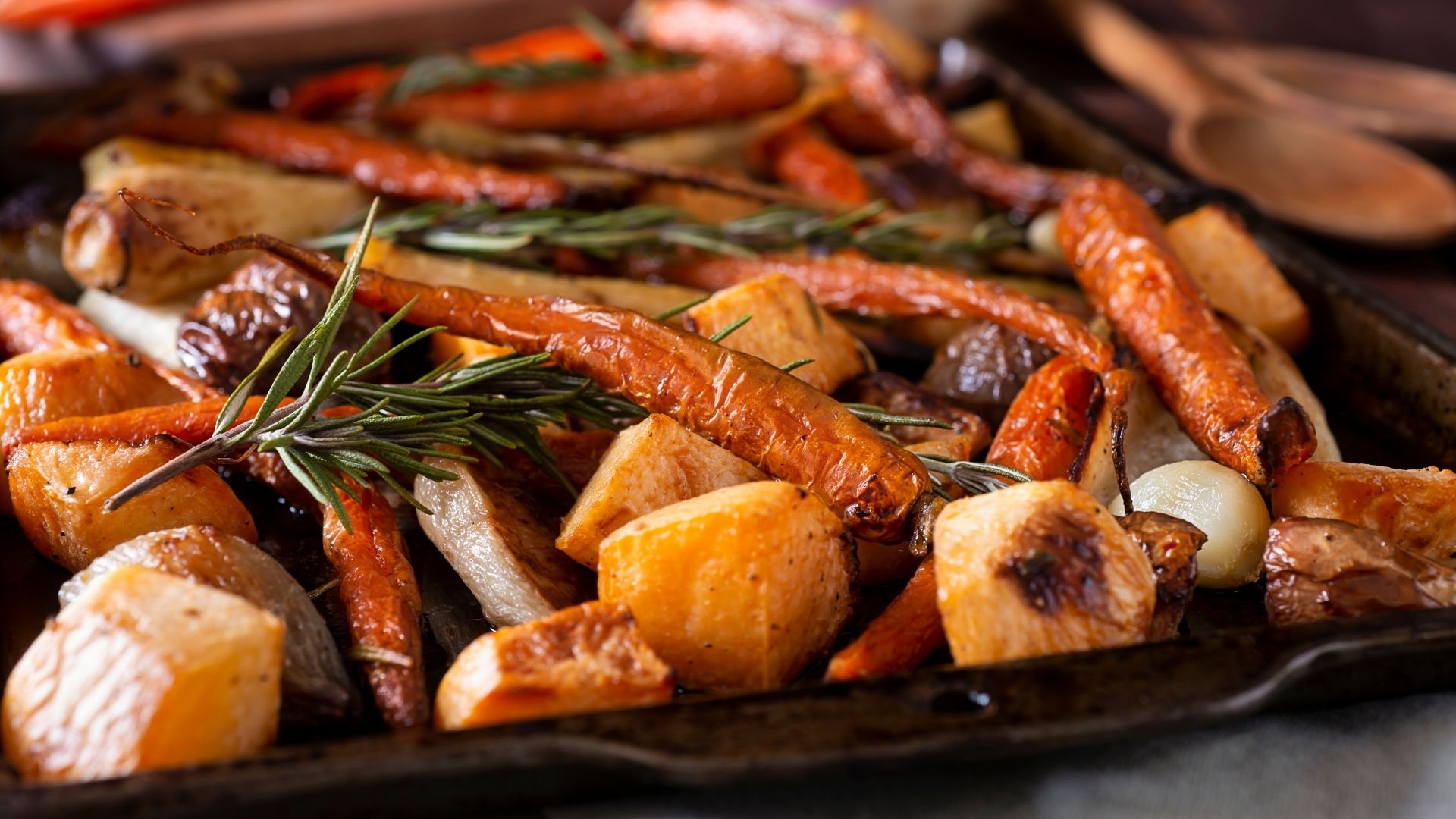
A common beginner mistake is treating keto as a vegetables-optional diet. It isn’t. Low-carb vegetables provide the fibre, micronutrients, and variety your body needs, and the rule of thumb for navigating the produce aisle is straightforward: vegetables that grow above ground are generally low in carbs, while root vegetables that grow below ground (potatoes, carrots, parsnips, beetroot) are generally high in carbs and should be avoided or limited.
The most budget-friendly approach to keto vegetables is to buy frozen. Frozen spinach, broccoli florets, cauliflower, green beans, and mixed stir-fry vegetables are nutritionally equivalent to fresh and often significantly cheaper. They also last far longer, which means less waste.
Your core vegetable list for keto:
- Spinach and leafy greens — almost zero net carbs, cheap, and works in everything from omelettes to salads to sautéed sides. Baby spinach bags and frozen spinach blocks are both useful to have on hand.
- Broccoli — one of the most satisfying low-carb vegetables, holds up well to roasting, steaming, and stir-frying, and pairs well with cheese-based sauces.
- Cauliflower — the great keto substitute vegetable. Rice it, mash it, roast it whole, or use it as a pizza base. Frozen riced cauliflower is a genuine time-saver.
- Courgette (zucchini) — mild, versatile, and almost negligible in carbs. Works as a pasta substitute when spiralised, or simply roasted or sautéed as a side.
- Cabbage — one of the most underrated keto vegetables, and almost always the cheapest option in the produce aisle. Works beautifully stir-fried in butter or as a braised side dish.
- Avocado — technically a fruit, but one of the most valuable foods on a keto diet. High in healthy monounsaturated fat, fibre, and potassium (which helps with electrolyte balance). Buy slightly underripe ones and let them ripen at home for better value.
The Dairy
Full-fat dairy is your friend on keto. Low-fat versions are not, they typically contain added sugar to compensate for the flavour lost when fat is removed, which means more hidden carbs and a worse macronutrient profile.
Butter is one of the most important fats on a keto diet and is used heavily in cooking. Grass-fed butter (brands like Kerrygold) has a better fatty acid profile, but any unsalted or salted butter works fine if budget is a concern.
Cheese is keto-friendly in almost all hard and semi-hard varieties. Cheddar, mozzarella, parmesan, gouda, brie, and cream cheese are all excellent choices. Buying a block and grating it yourself is noticeably cheaper per gram than buying pre-shredded cheese, which also often contains starchy anti-caking agents that add unnecessary carbs.
Heavy cream serves double duty in coffee (a splash of heavy cream is a classic keto coffee addition) and in cooking, where it forms the base of many sauces and soups. A small carton goes a long way.
Full-fat Greek yoghurt sits in a grey zone. It’s low in carbs but not zero, so check the label and keep portions measured if you include it. It’s a useful option for variety rather than a daily staple.
The Fats and Oils
Since fat makes up the bulk of your daily caloric intake on keto, the quality and variety of your cooking fats matters more than on most diets.
Extra virgin olive oil is the most versatile everyday fat for dressings, drizzling, and lower-heat cooking. It’s widely available and one of the best sources of monounsaturated fats you can eat.
Coconut oil is useful for higher-heat cooking and adds a mild flavour that works well in both savoury and sweet applications. It’s also a source of medium-chain triglycerides, which are processed differently from other fats and can provide a quick energy boost.
Avocado oil has the highest smoke point of the common cooking oils and is ideal for searing, roasting, and any application where heat is high. It’s pricier than olive oil but a worthwhile addition to the pantry.
Avoid vegetable oil, canola oil, corn oil, and other seed oils. They’re high in omega-6 fatty acids and prone to oxidation at cooking temperatures, which creates compounds that aren’t good for you.
The Pantry Staples
A well-stocked keto pantry makes weeknight cooking dramatically easier and reduces the temptation to reach for off-plan convenience food when you’re tired and hungry.
Nuts and seeds: Almonds, walnuts, pecans, macadamia nuts, and Brazil nuts are all keto-compatible and make excellent snacks. They’re calorie-dense, so portion size matters, but a small handful between meals keeps hunger at bay effectively. Chia seeds and flaxseeds are particularly valuable for fibre content. Buy nuts in bulk from wholesale retailers when possible — the per-gram price is significantly lower than small supermarket bags.
Nut butters: Almond butter and peanut butter (check for no added sugar) are convenient fat and protein sources. They work as a snack spread on celery sticks, stirred into sauces, or eaten by the spoonful when you need something quick.
Canned goods: Canned tuna and salmon (as covered above), canned coconut cream (useful for curries and soups), and canned olives all belong in a keto pantry. Olives are a great fat-rich snack with essentially no carbs.
Condiments and flavourings: Mustard, hot sauce, apple cider vinegar, soy sauce or tamari, and mayonnaise (full-fat, ideally made with avocado oil) are all low-carb or zero-carb and add enormous flavour variety to simple meals. Avoid ketchup, barbecue sauce, sweet chilli, and most commercial salad dressings unless the label confirms low sugar content.
Herbs and spices: Virtually all dried herbs and spices are keto-friendly and contain minimal carbs per serving. Salt, black pepper, garlic powder, onion powder, paprika, cumin, Italian seasoning, and chilli flakes are a good starter set that covers most cooking styles.
Foods to Avoid
Knowing what to leave on the shelf is just as useful as knowing what to put in the trolley.
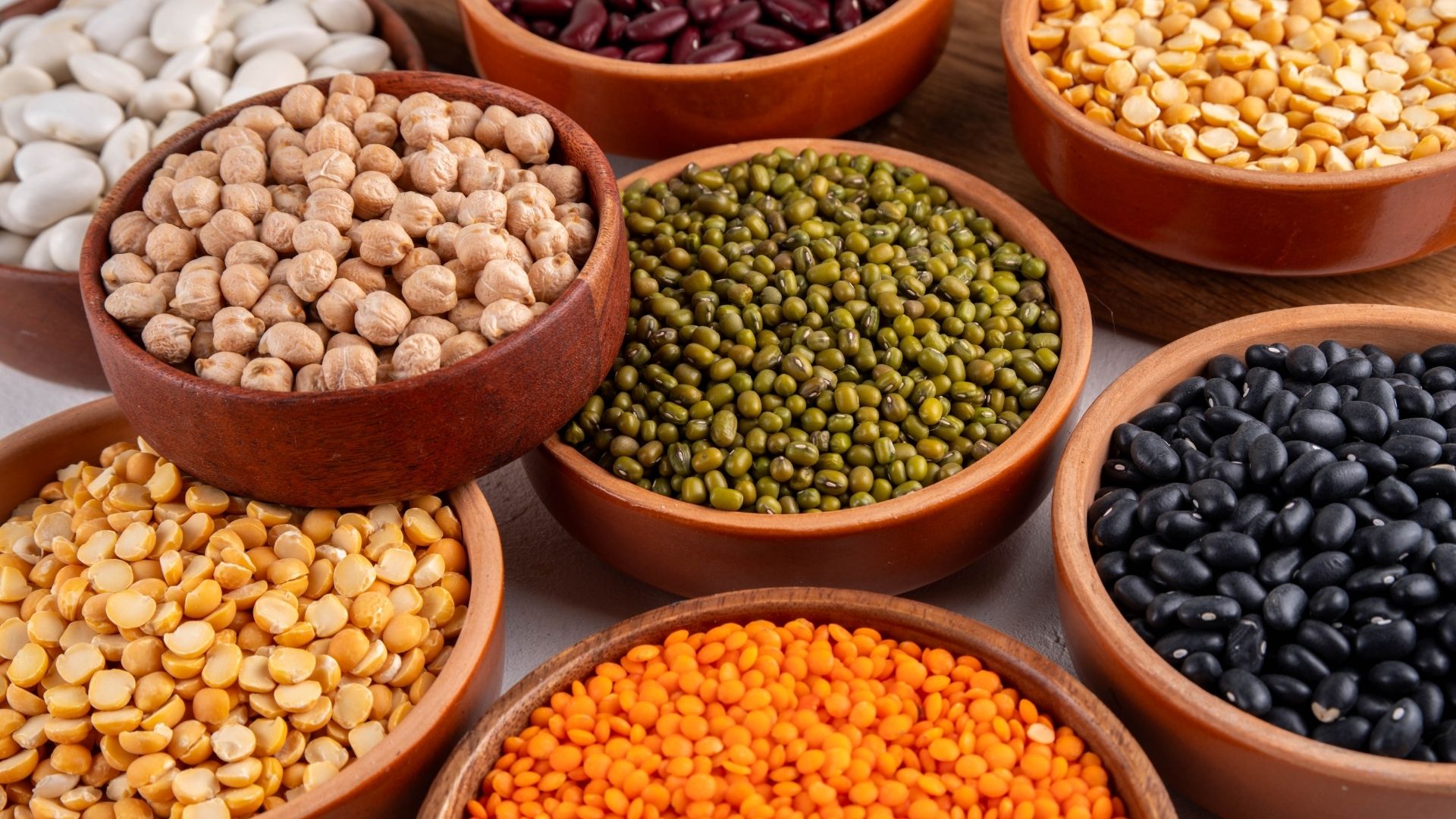
Bread, pasta, rice, and all other grain-based foods are out. Sugar in all its forms, honey, maple syrup, agave, regular table sugar, is out. Starchy vegetables like potatoes, sweet potatoes, corn, and most root vegetables should be avoided. Most fruit is too high in sugar for regular keto eating, with the exception of small portions of berries (strawberries, blueberries, raspberries), which are relatively low in net carbs. Milk is higher in sugar (lactose) than most dairy products and should be used sparingly if at all, a splash in coffee adds up quickly across the day.
Processed “keto” products deserve a special mention here. Many keto-labelled bars, shakes, and snack foods contain sugar alcohols or other sweeteners that affect some people’s blood sugar and ketosis more than the packaging suggests. They’re fine as occasional convenience items, but building your grocery list around them rather than whole foods is both more expensive and less effective.
Budget Tips for Keto Grocery Shopping
Keto has a reputation for being expensive, and it can be. But, only if you shop for it the wrong way. A few strategies consistently keep costs down without compromising on quality.
Buy proteins in bulk and freeze them. A large pack of chicken thighs or a big batch of ground beef divided into portions and frozen is significantly cheaper per serving than buying small quantities repeatedly throughout the week.
Choose frozen vegetables over fresh whenever the fresh option is significantly pricier. Frozen broccoli, spinach, and cauliflower are nutritionally identical to fresh and last months in the freezer without waste.
Eggs are your secret budget weapon. At under fifty cents per egg in most supermarkets, they’re the cheapest high-quality protein and fat source available, and their versatility means you’ll never run out of ways to use them.
Skip the specialty keto aisle entirely for at least the first month. Almond flour, erythritol, and keto-branded products are all more expensive than the whole food basics you actually need to get started and stay in ketosis.
A Simple First Shop
If this is your very first keto grocery run and you want to keep it simple, these are the items to prioritise:
- Eggs (one to two dozen)
- Ground beef (80/20)
- Chicken thighs (bone-in, skin-on)
- Bacon (check for low sugar)
- Butter
- Cheddar cheese (block, not pre-shredded)
- Heavy cream
- Spinach (fresh or frozen)
- Broccoli (fresh or frozen)
- Avocados
- Olive oil
- Almonds or mixed nuts
- Tinned tuna or sardines
- Salt, pepper, and a few basic spices
These fifteen items will cover you for a solid first week of keto eating without requiring specialty products, complicated recipes, or a grocery bill that gives you pause at the checkout. Once you have the fundamentals down, you can expand your repertoire, but this is more than enough to get started.
Getting started with keto doesn’t have to be complicated or expensive. Stick to this list, build your meals around whole foods, and resist the temptation to overhaul your entire pantry on day one. Buy the basics, cook simple meals, and let your grocery habits evolve naturally as you get more comfortable with the diet. The printable version of this list is available above, print it out or pull it up on your phone next time you shop, and take the guesswork out of your first keto grocery run completely.
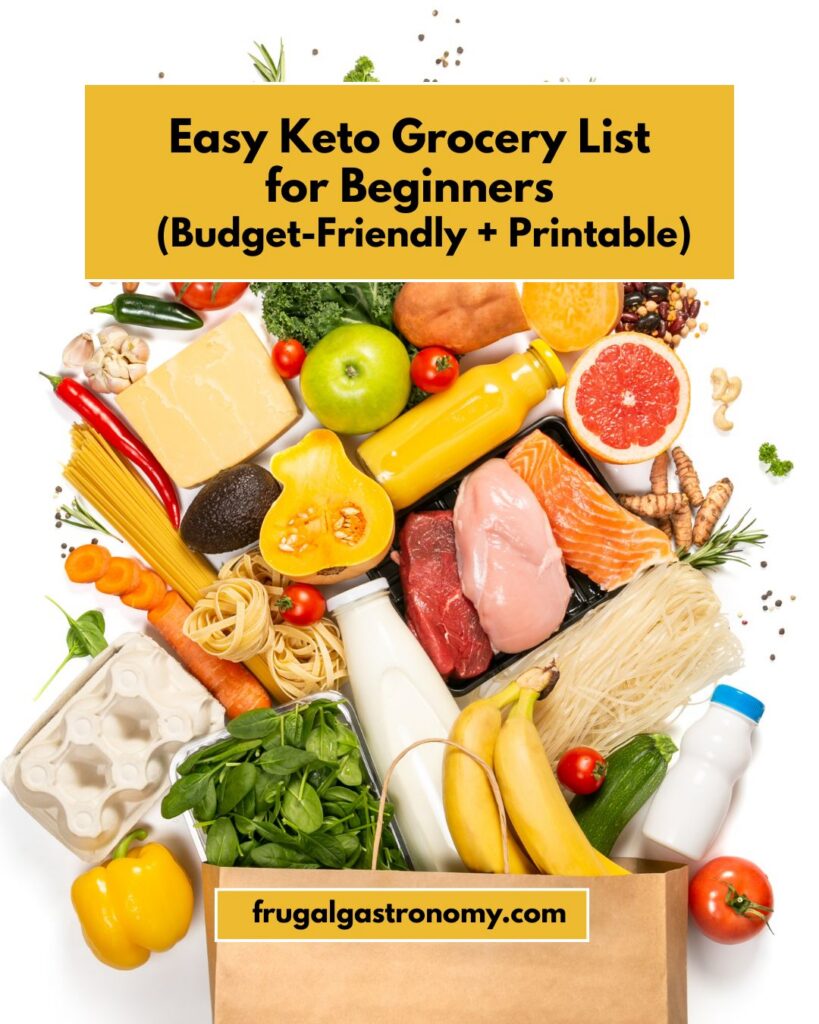
Download your FREE Keto Grocery List now and make your next grocery trip faster, easier, and fully keto-friendly!