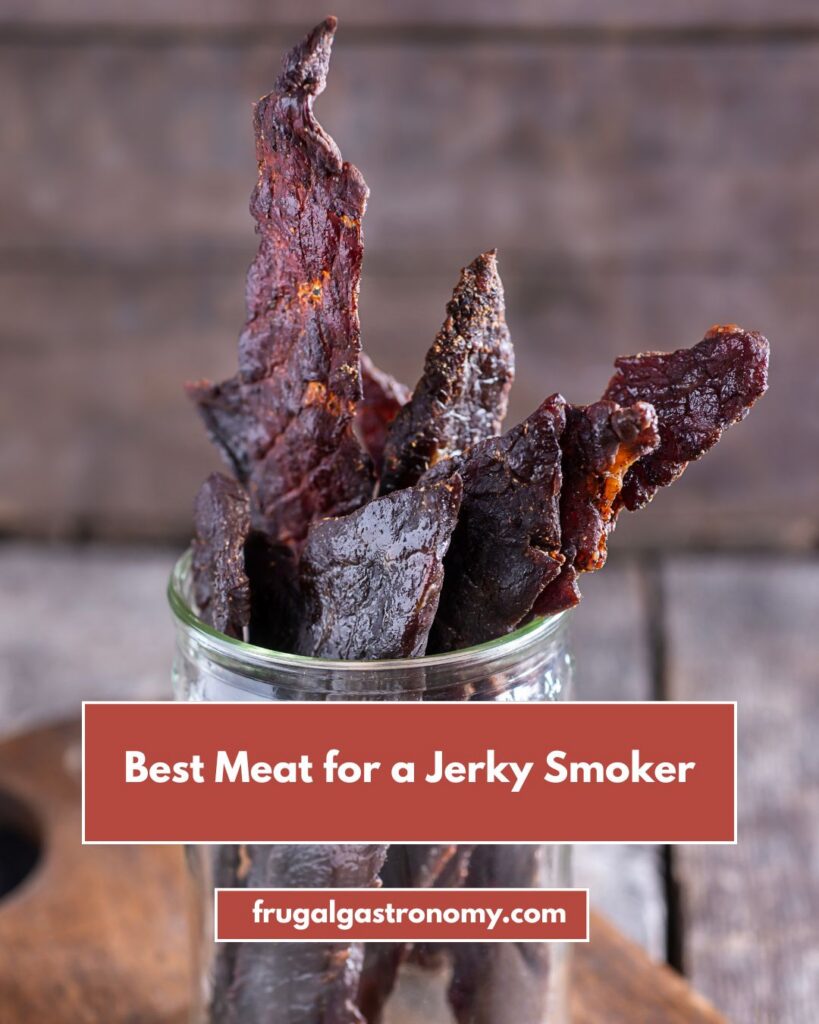
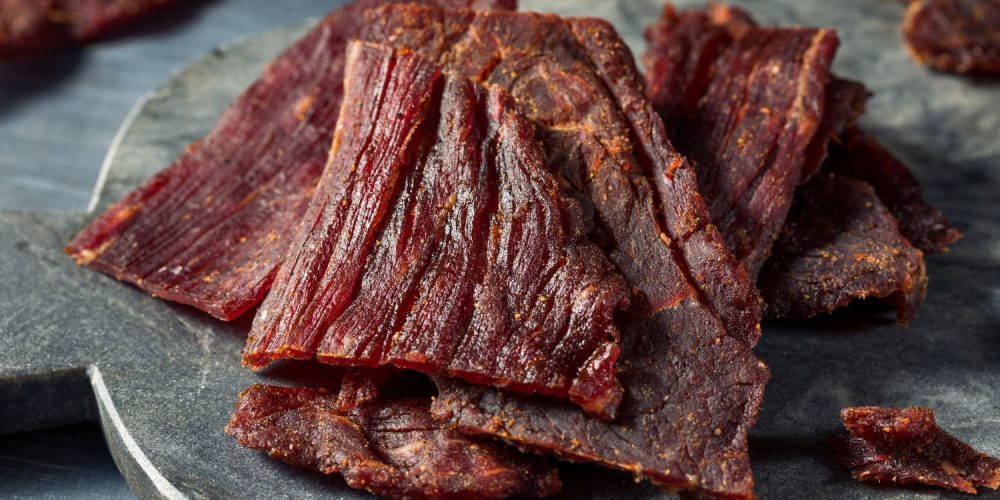
There’s a reason homemade smoked jerky has such a devoted following. The combination of low-and-slow smoke, carefully seasoned meat, and that satisfying chew you just can’t get from a store-bought bag is an experience entirely in its own category. But if you’ve ever ended up with jerky that’s too tough, too fatty, or just wrong in a way you can’t quite put your finger on, the problem likely started before the meat ever hit the smoker. It started at the butcher counter.
Choosing the right cut of meat is the single most important decision you’ll make in the entire jerky-making process. The smoke, the marinade, the temperature, all of those factors matter, but they’re working with what you give them. Start with the wrong cut, and no amount of hickory smoke or soy sauce is going to save you. Start with the right one, and the rest practically takes care of itself.
This guide breaks down the best meats for a jerky smoker, what makes each cut work, and how to think about your selection based on budget, flavor preference, and how you like your jerky to chew.
What Makes a Cut of Meat Good for Jerky?
Before diving into specific cuts, it helps to understand what you’re actually looking for, because the criteria for great jerky meat are almost the opposite of what you’d want for a braised or grilled dish.
The ideal jerky meat is lean. Fat is the enemy of jerky for two reasons: it doesn’t dehydrate the way muscle fiber does, and it goes rancid quickly, dramatically shortening your jerky’s shelf life. A cut that looks beautifully marbled for a steak dinner is a poor choice for the smoker when you’re making jerky. You want to be actively hunting for the leanest options available.
Beyond leanness, you want a cut that has a relatively consistent grain running through it, which allows you to slice predictably. Either you cut with the grain for chewier strips or against it for more tender, snappy pieces. Large, flat muscles with little connective tissue work best because they slice cleanly and dehydrate evenly across the strip.
The Best Cuts of Beef for Jerky
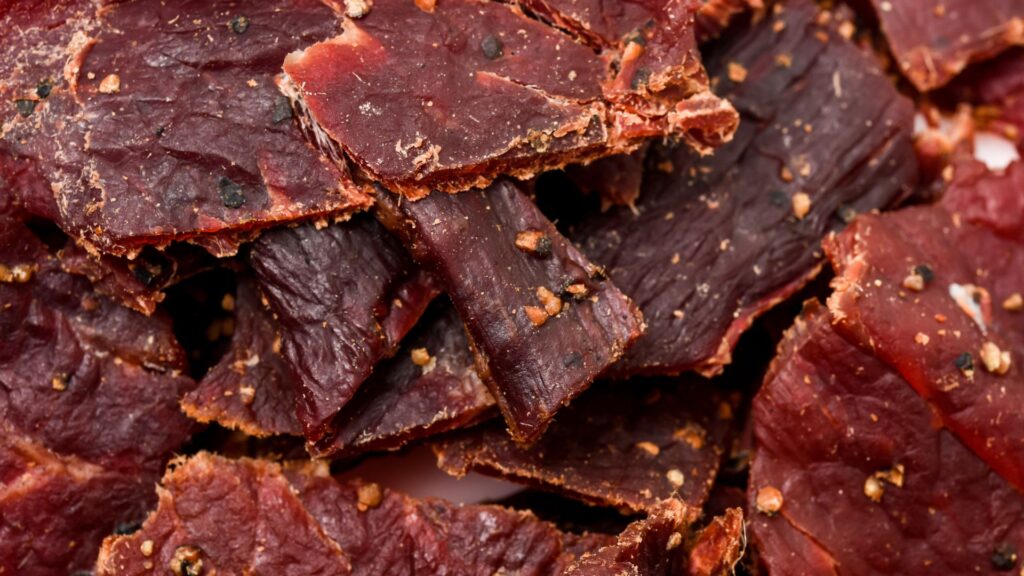
Beef is by far the most popular choice for smoked jerky, and for good reason. It has a robust, savory depth that holds up beautifully to smoke and bold marinades, and there are several cuts that are tailor-made for the job.
Top Round (Inside Round)
Top round is widely considered the gold standard for beef jerky, and it earns that reputation honestly. It’s one of the leanest cuts on the entire animal, coming from the inside of the hind leg where the muscle does a lot of work and therefore carries very little intramuscular fat. It’s also large and flat in shape, which makes slicing consistent strips remarkably straightforward.
From a budget standpoint, top round is genuinely one of the most affordable options in the beef case, particularly if you buy a whole roast and slice it yourself. Buying pre-sliced beef for jerky from specialty retailers tends to cost significantly more per pound, and doing it yourself with a sharp knife (or a meat slicer if you have one) gives you complete control over thickness.
Bottom Round
Bottom round is top round’s close cousin, and the two are largely interchangeable for jerky purposes. It comes from the outer portion of the hind leg, is similarly lean, and is often slightly cheaper than top round. The texture can be marginally tougher due to slightly more connective tissue, but when sliced correctly and properly marinated, the difference in the final product is minimal. If top round isn’t available or is priced high that week, bottom round is a completely legitimate substitute.
Eye of Round
Eye of round is arguably the most ideal shape for jerky of any cut on this list. It’s a long, cylindrical muscle that slices into perfectly uniform rounds or oval strips with zero trimming required. It’s also exceptionally lean, even leaner than top or bottom round in most cases. The trade-off is that it can be a touch less flavorful than other round cuts due to its very low fat content, which means your marinade needs to do more of the flavor heavy lifting. But for consistent, beautiful slices that dehydrate evenly on the smoker, it’s hard to beat.
Flank Steak
Flank steak is a favorite among jerky enthusiasts who prioritize flavor and texture over absolute leanness. It has a pronounced, visible grain that runs lengthwise, which gives you more control over the final chew: slice with the grain for strips that have a satisfying, rope-like pull, or slice against it for something more tender that breaks apart cleanly. It’s slightly higher in fat than the round cuts, so you’ll want to trim any visible surface fat before marinating, but the beefy, rich flavor it produces is notably more complex than leaner options.
Sirloin Tip (Knuckle)
Sirloin tip, sometimes labeled as “knuckle” at the butcher, is a slightly underrated choice for jerky that sits comfortably between the economy of round cuts and the flavor payoff of flank steak. It’s lean, large enough to yield substantial strips, and has a mild, pleasant beef flavor that works well with a wide range of marinades from teriyaki to peppered garlic. If you find it on sale, it’s worth stocking up.
Beyond Beef: Other Meats Worth Smoking for Jerky
While beef dominates the jerky conversation, it’s far from the only option. Some of the most interesting and flavorful jerky comes from proteins that are often overlooked at the smoker.
Venison
Venison is arguably the single best meat for jerky from a nutritional and textural standpoint. Wild deer meat is incredibly lean. Often leaner than the leanest beef cuts, the rich, slightly gamey flavor it produces when smoked is genuinely unlike anything you can achieve with beef. Hunters have been making venison jerky for centuries for good reason: it’s practical, delicious, and uses every part of the harvest. The hindquarter cuts (the equivalent of round cuts in beef) are your best starting points. If you don’t hunt yourself, many specialty butchers and online meat suppliers carry venison now at increasingly reasonable prices.
Turkey Breast
Turkey breast jerky is dramatically underappreciated, and it’s worth making the case for it here. It’s one of the leanest proteins available, it takes on smoke with a subtlety that complements rather than overwhelms, and it produces a jerky that’s noticeably lighter in both texture and calorie count than beef. Slice turkey breast against the grain for strips that are tender and easy to eat, and lean into sweeter marinade profiles, honey, brown sugar, and apple cider vinegar work beautifully with smoked turkey.
Pork Loin or Pork Tenderloin
Pork jerky has a loyal following, particularly in certain regional BBQ traditions, and both loin and tenderloin are excellent choices. Pork loin is the more economical pick and yields large, flat slices. Tenderloin is smaller but even leaner and more tender, making it a premium option when you want something that eats a little more delicately. Both benefit from Asian-inspired marinades, think hoisin, sesame, ginger, and a touch of five spice, which play off the natural sweetness of pork in a wonderful way.
Bison
Bison has become increasingly accessible at mainstream grocery stores, and its nutritional profile is extraordinary: lower in fat than even the leanest beef cuts, high in protein, and with a flavor that’s subtly richer and slightly sweeter than conventional beef. Round cuts from bison work beautifully for jerky using exactly the same approach as beef. The main caveat is cost, bison tends to run significantly higher per pound than beef, but for a special batch or a gift, it’s a memorable choice.
Cuts to Avoid for Smoked Jerky
Knowing what not to buy is just as useful as knowing what to seek out. Several cuts that are beloved for other cooking methods are poor fits for jerky:
- Ribeye and NY Strip: These are the wrong choice for jerky despite being spectacular steaks. Both are heavily marbled, meaning the fat that makes them so luxurious on the grill will simply not dehydrate properly, resulting in a greasy jerky with a dramatically shortened shelf life.
- Chuck Roast: Chuck is a workhorse cut for braising and slow cooking, but it’s threaded with connective tissue and fat deposits that make it difficult to slice consistently and problematic to dehydrate. The uneven fat distribution means some pieces will dry out correctly while others remain greasy and soft.
- Brisket: While brisket is one of the great smoked meats, its fat content and layered muscle structure make it unsuitable for jerky. The flat portion is leaner than the point, but neither is ideal for this application.
Tips for Preparing Your Meat Before It Hits the Smoker
Even the best cut needs a little preparation to perform at its peak in the smoker. Freeze your meat for 1 to 2 hours before slicing, not long enough to fully freeze it, but enough to firm it up significantly. This makes slicing far more controlled and consistent, whether you’re using a knife or a slicer. Aim for slices between ⅛ and ¼ inch thick; thinner than that and your jerky may become too brittle, thicker and it risks not dehydrating fully through the center.
Trim aggressively. Even on lean cuts, remove all visible exterior fat before marinating. It takes a few extra minutes but makes a meaningful difference in both the final texture and the shelf life of your finished jerky.
Finally, marinate your sliced meat in the refrigerator, for a minimum of 4 hours and ideally overnight. Never marinate at room temperature. The salt and acidic components in your marinade will help draw moisture from the surface of the meat and lay the groundwork for a cleaner dehydration process in the smoker.
The Bottom Line
Great jerky starts with great meat selection, and the good news is that the best cuts for a jerky smoker tend to be among the most affordable options at the butcher counter. Top round, bottom round, and eye of round are your workhorses. They’re lean, large, and well-priced. Flank steak and sirloin tip step things up in the flavor department. And if you’re willing to venture beyond beef, venison, turkey breast, and pork loin open up a whole world of jerky possibilities that most home smokers never explore.
Pick the right cut, trim it well, slice it consistently, and your smoker will do the rest. The hardest part, as any jerky maker will tell you, is waiting for it to finish.