There’s a particular shift that happens in most kitchens once the weather changes. Cooking moves away from quick salads and grilled dinners and toward soups, stews, casseroles, and slow-cooked meals that take longer but ask less of you in the moment. That shift is a genuine opportunity for the budget-conscious cook, because the ingredients that define fall and winter cooking happen to be some of the cheapest, longest-lasting items in the entire grocery store.
The trick is approaching the seasonal pantry build the right way. A pantry full of food you’ll never eat isn’t frugal. It’s wasteful, regardless of how good the price was when you bought it. The goal isn’t to fill every shelf as quickly as possible. It’s to build a stocked, well-rounded pantry gradually, around food your household actually eats, while taking advantage of the specific prices and seasonal abundance that fall offers.
This guide walks through exactly how to do that, with a focus on building the pantry affordably rather than all at once.
Start With an Honest Inventory, Not a Shopping List
Before buying a single new item, the most useful thing you can do is open every cabinet, drawer, and bin in your kitchen and see what’s actually there. Check expiration dates, set aside anything that’s expired or close to it, and make a clear list of what’s genuinely running low. This step gets skipped constantly because it feels like a delay rather than progress, but it consistently prevents the single biggest waste of a pantry-stocking budget: buying a second jar, can, or bag of something you already had.
This same inventory step also gives you a realistic starting point. Most kitchens already have a partial foundation of pantry staples sitting in them, just not necessarily in the quantities or variety that get a household comfortably through a colder, busier season. Knowing exactly what you’re starting from means every dollar you spend going forward goes toward genuinely filling a gap rather than duplicating something already on the shelf.
Take Advantage of Fall’s Cheapest, Longest-Lasting Produce
Fall offers a genuinely unique opportunity for pantry building because so much of the produce in season right now also happens to store exceptionally well. Apples, winter squash, potatoes, onions, and carrots are all inexpensive during this window and can last for months when stored properly, which makes them ideal candidates for buying in slightly larger quantities than a single week’s meals would require.
Potatoes and onions in particular keep for weeks in a cool, dark place without needing the refrigerator at all, and winter squash can sit on a counter or in a pantry for a month or more without spoiling. Apples keep well in the refrigerator for an extended period and work across both savory and sweet cooking, which makes them a genuinely versatile addition to a fall pantry rather than a single-purpose ingredient. Buying these items while they’re at their seasonal low, rather than waiting until winter when prices climb back up, is one of the simplest and most effective ways to stretch a pantry-building budget during this particular stretch of the year.
If your area has farmers markets, farm stands, or co-ops, visiting near closing time is worth the small effort, since vendors frequently lower prices to clear inventory before packing up for the day. Checking whether local farms offer bulk deals or “seconds” boxes, produce that’s slightly imperfect in appearance but entirely fine for eating or preserving, can stretch a fall produce budget considerably further than buying the same items at full retail price.
Build Gradually: A Few Extra Dollars at a Time
The most financially sustainable way to stock a pantry, whether for fall specifically or as an ongoing habit, is to build it a little at a time rather than attempting one large purchase. One household built an entire multi-week pantry supply by spending just two or three dollars extra on each weekly shop, adding a bag of oats one week, a few cans of tuna and beans the next, then some cooking oil, then dried pulses and spices the following weeks. Within roughly three months, that small, consistent habit produced a pantry that could realistically cover several weeks of meals.
This approach works because the additional spending is small enough to go unnoticed within a normal weekly grocery budget, while the cumulative result over a season is genuinely substantial. It also naturally avoids the common mistake of buying a large quantity of something all at once, only to discover later that it wasn’t actually needed in that volume or wasn’t something the household enjoys eating regularly.
Prioritize the Staples That Carry Fall and Winter Cooking
A handful of pantry categories do the heaviest lifting once the weather turns, and prioritizing these first produces the most immediate cooking flexibility for the lowest cost.
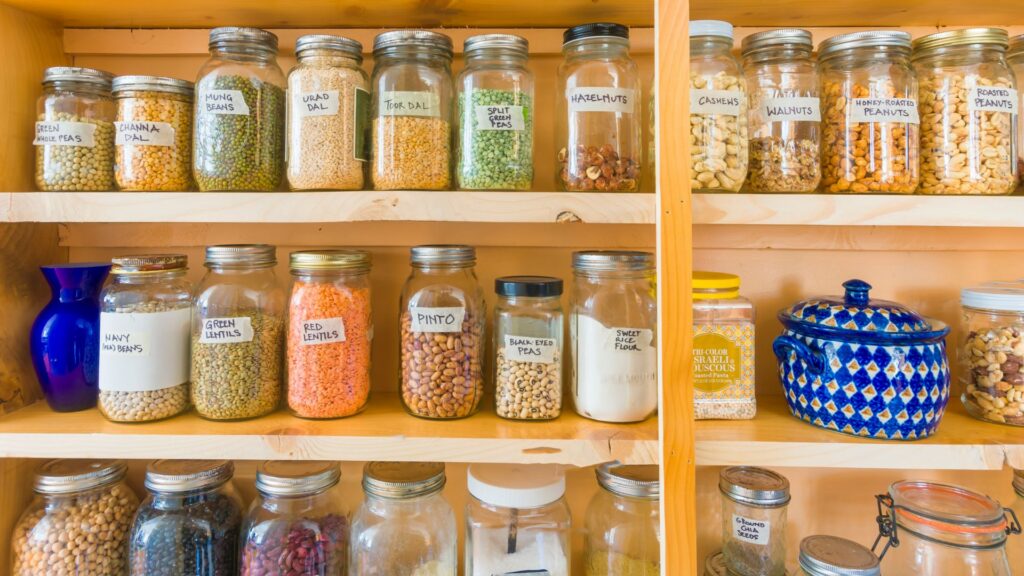
Dried and canned legumes are the backbone of nearly every soup, stew, and slow-cooked dish that defines this time of year. Beans and lentils provide a great source of protein and nutrients, and dried versions in particular can be kept for years when stored properly, making them one of the lowest-risk, lowest-cost pantry investments available. Stocking a rotating mix of black beans, pinto beans, chickpeas, and a couple of lentil varieties covers an enormous range of recipes without much storage space required.
Whole grains and pasta follow closely behind in importance. Rice and pasta are inexpensive to buy in bulk, store for months without any special handling, and form the base of an enormous number of meals on their own. Rolled oats deserve a place here too, not just for breakfast but as a binder in baking and a base for hearty, warming morning meals during the colder months.
Canned tomatoes, broth, and a reliable cooking oil round out the foundation. These three ingredients alone, combined with the legumes and grains above, can produce dozens of different soups and stews across a season without needing to return to the grocery store for anything beyond fresh vegetables and the occasional protein.
Stock Dried Fruit and Aromatics for Flavor and Versatility
A pantry built purely on grains, legumes, and canned tomatoes is functional but can feel monotonous after a few weeks. Dried fruit is one of the easiest ways to add variety without much additional cost. Cranberries, dates, figs, and dried bananas all keep extremely well, add natural sweetness to oatmeal, baking, salads, and snack mixes, and provide an alternative to relying solely on refined sugar for flavor.
A well-stocked spice shelf matters just as much, since the same base of beans, grains, and canned tomatoes tastes completely different depending on how it’s seasoned. Cumin, smoked paprika, dried thyme, rosemary, and a few warming spices like cinnamon and nutmeg cover the range of fall and winter cooking styles, from savory stews to spiced baked goods, without requiring a large or expensive spice collection.
Use Your Freezer as an Extension of the Pantry
The freezer deserves to be treated as part of the same overall stocking strategy rather than a separate system entirely. When meats, butter, or fall produce go on sale, buying extra and freezing it is one of the most effective ways to extend the value of fall’s lower prices well into the more expensive winter months.
Fall is a particularly good time to prepare freezer meals ahead of busier, colder weeks. Batch-cooked soups, stews, and slow-cooker ingredients portioned and frozen now mean far less effort on a random Tuesday in January when motivation to cook from scratch is low. Apples and berries also freeze well for later use in smoothies or baking, which means a good seasonal price on fresh fruit can be locked in and enjoyed for months past the actual season.
Organize What You Buy So Nothing Goes to Waste
A pantry that’s well stocked but poorly organized tends to waste food just as readily as an empty one, since items get pushed to the back, forgotten, and eventually discarded past their best-quality window. A first in, first out system, placing newer purchases behind older ones rather than in front, is the single most effective habit for preventing this. Households that consistently rotate stock this way report meaningfully reduced food waste over time compared to those who don’t.
Storing dry goods like flour, rice, oats, and cereal in airtight containers rather than their original packaging extends shelf life considerably and helps prevent pests, which matters more during a season when pantry items tend to sit for longer stretches between uses. Clear containers or bins also make it easier to see at a glance what’s running low, which keeps the gradual restocking habit described earlier running smoothly without requiring a full inventory check every single week.
Keep a Simple Inventory and Update It as You Go
A basic running list of what’s in the pantry, updated each time something is used up or added, removes most of the guesswork from the entire process. This doesn’t need to be an elaborate spreadsheet. A notes app on your phone, or even a sheet of paper taped inside a cabinet door, works perfectly well as long as it’s actually updated consistently.
The value of this habit compounds over the season. It prevents duplicate purchases, flags what’s running low before you’re actually out, and gives you a clear, realistic picture of how deep your pantry has actually grown, which makes it considerably easier to decide when you’ve reached a comfortable buffer for the season versus when there are still genuine gaps worth filling on the next few shopping trips.
Stock What You’ll Actually Eat, Not What Looks Good on a List
It’s worth repeating the most important principle in this entire process, because it’s the one most easily lost in the excitement of building a well-stocked pantry. Don’t buy or stock pinto beans if your family never eats pinto beans, and don’t fill shelf space with a specialty grain or dried legume just because it appeared on someone else’s list of ideal pantry staples. The food in your pantry needs to be food your household will genuinely cook and eat, or the entire exercise becomes wasted money and wasted shelf space regardless of how good the original price was.
Think honestly about your typical week of meals before deciding what to prioritize. If your family cooks a lot of rice-based dishes, a deeper stock of rice makes sense. If pasta is the more frequent staple, prioritize that instead. The right fall and winter pantry looks different for every household, and the version that actually gets used consistently is always the better investment than the version that simply looks comprehensive on a shelf.
The Bottom Line
Stocking a fall and winter pantry on a budget isn’t about a single large shopping trip or finding the perfect once-a-year sale. It’s about starting with an honest look at what you already have, taking advantage of the specific produce and pricing that fall offers, building gradually with a few extra dollars on each regular shopping trip, and organizing what comes in so nothing goes to waste before it gets used. Done this way, by the time winter’s coldest, busiest weeks arrive, your pantry becomes exactly what it’s meant to be: a genuine source of ease, full of food you’ll actually cook with, built without ever having strained the budget to get there.