Grocery prices have climbed by roughly a fifth over the past four years, and that cumulative pressure lands differently at the register in fall than it does in summer. Food-at-home prices were still running above their long-term historical growth rate as of mid-2026, and fall is exactly when household cooking intensifies: family dinners happen more frequently, the entertaining season begins, and the casual salads and cold meals of warmer months give way to roasts, soups, and baked goods that require more ingredients, more variety, and more careful planning to keep affordable.
The households that navigate this pressure best are not the ones spending hours hunting for coupons. They’re the ones who have a clear, dependable shopping strategy that makes good use of what’s actually cheap right now, avoids the structural traps in how grocery stores are designed, and turns the week’s grocery run into a system rather than a recurring improvised decision. This article lays out that strategy for fall specifically, built around the seasonal produce window, the inflation context, and the real behavioral dynamics of weekly grocery shopping.
Start the Week Before You Start the List
The most reliable way to reduce a grocery bill in any season is to begin the shopping process before you write the list, not at the store, but at home. Before any list gets written, check three places in order:
- The freezer. This is where most households have the clearest blind spot: protein bought in bulk and frozen weeks ago, batch-cooked grains portioned from a previous Sunday cook, leftovers put away with good intentions and then forgotten beneath newer additions. A two-minute freezer inventory before every weekly shop reliably turns up usable food that can anchor one or two of the week’s dinners at zero additional cost.
- The pantry. A separate audit in this series covers that process in depth. For weekly purposes, a quick check of what’s already there before writing a grocery list prevents the duplicate buying that quietly inflates grocery bills over time, buying more of something you already have simply because you forgot it was there is one of the most common and least noticed forms of overspending.
- The refrigerator. What vegetables are already in there that need to be used this week before they go bad? What proteins need to be cooked soon? A simple rule is to assign the most perishable items to the earliest meals in the week and the more shelf-stable purchases to later in the week, which reduces waste and prevents the frustrating situation of opening the vegetable drawer on a Thursday to find things that should have been cooked on Monday.
Build Your Meal Plan Before You Build Your List
Once you know what’s already in the house, meal planning for the week takes noticeably less time and produces a more useful result, because you’re filling genuine gaps rather than starting from scratch. The most common advice on budget meal planning is to plan five to seven dinners before writing the grocery list, and that advice holds up well. The fall-specific version adds one additional step: check what’s on sale and what’s in season before finalizing those meal choices rather than after.
In practical terms, before sitting down to write your meal plan for the week, open your grocery store’s app or weekly ad and spend five minutes identifying what proteins, produce, and pantry items are on special. Build as many of the week’s meals as possible around those items. If chicken thighs are on sale, they appear in two or three meals this week. If butternut squash is featured in the produce section at its seasonal low, it anchors a soup and possibly a grain bowl. If canned tomatoes are on promotion, you stock up on those rather than buying only what one recipe requires.
This approach, sometimes called reverse meal planning, tends to produce lower grocery bills than deciding what you want to eat first and then hoping the ingredients happen to be affordable.
Shop Seasonally and Let the Produce Section Set the Agenda
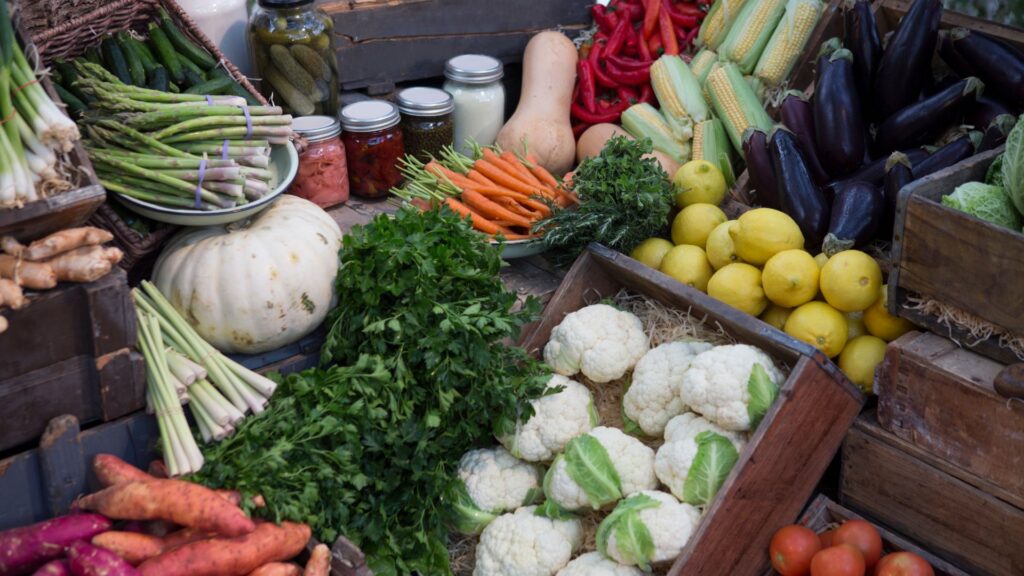
Fall is one of the two strongest value windows in the entire produce year, alongside summer. All of the following are at their seasonal best and their seasonal cheapest right now, and building the week’s produce choices around what the season actually offers, rather than what a recipe from a food magazine calls for, is one of the most effective budget habits available:
- Root vegetables
- Winter squash
- Apples and pears
- Cabbage and Brussels sprouts
- Cranberries
Seasonal produce costs less for straightforward supply-and-demand reasons: supply is high, transportation distances are short, and the cost of production is at its annual low because the crop is at its natural harvest peak. A butternut squash in October costs a fraction of what it costs in March. An apple in fall costs less than half what a similar apple costs in spring, when supplies are drawn down and storage costs are built into the price.
The practical application is simple: walk through the produce section first on every fall grocery run, note what’s abundant and cheaply priced, and build the week’s vegetable choices around those items rather than buying a specific list regardless of what it costs at the moment. Frozen vegetables serve as a dependable and affordable alternative for anything fresh that’s out of season or priced high. Frozen broccoli, spinach, peas, and corn are nutritionally comparable to fresh equivalents and typically cheaper per serving, with zero waste from spoilage.
Does a Grocery List Actually Save You Money?
A meal plan without a grocery list is only half the system. The list translates the plan into a specific, bounded set of purchases that protects the grocery budget at the store level, which is where most budget strategies fall apart regardless of how good the planning was.
The behavioral mechanism is straightforward: impulse purchases are considerably harder to make when you’re moving through the store with a specific list organized by section. You pass through fewer aisles you don’t need, you spend less time browsing, and each item in the cart has a meal attached to it rather than a vague intention to use it someday.
Organizing the list by store section rather than by recipe also reduces the time spent in the store, which has a secondary savings effect. The more time spent browsing, the more items end up in the cart. A shopper who gets in and out in 25 minutes with a focused list tends to spend less than the same shopper spending 50 minutes wandering an aisle they didn’t plan to be in.
Is Grocery Pickup Really Cheaper Than Shopping In Store?
If there is a single structural change that produces the most reliable reduction in weekly grocery spending for the most households, it’s switching from in-store shopping to online ordering with free grocery pickup for the majority of weekly shops.
Most major grocery chains offer free grocery pickup with no minimum order in 2026, and the savings from using this service come largely from behavioral differences between online and in-store shopping. Online ordering forces adherence to a list, shows a running total in real time before the order is placed, and removes the sensory triggers, product placement, end-of-aisle displays, and sample stations that drive impulse purchases in physical stores.
This doesn’t mean never shopping in person. There are real advantages to being in the produce section for seasonal purchases, where seeing and feeling the actual quality of what’s available is genuinely useful. A hybrid approach works well for many households: order the bulk of each week’s staple items and proteins for pickup, then shop the produce and fresh sections in person during a shorter visit that doesn’t involve the full weekly shop.
Buy for the Week, Not for the Idea of the Week
One of the more quietly expensive habits in grocery shopping is buying aspirationally rather than realistically. Purchasing ingredients for five sophisticated dinners when the household will realistically cook three, and order takeout or eat leftovers on the other nights, produces two guaranteed outcomes: a receipt that reflects five dinners but meals for three, and a refrigerator full of perishables that need to be used before they go bad.
Honest, realistic meal planning, one that accounts for the nights that are genuinely too busy for a real cooking effort, produces a more useful, lower-waste grocery list than optimistic planning that assumes every evening is a fresh-start cooking opportunity. Build two or three of the week’s dinners around genuinely low-effort options: a soup that takes 30 minutes and uses mostly pantry staples, a pasta dish, a grain bowl built around leftovers from an earlier meal. Reserve the more involved cooking for the nights when time and energy are actually available.
Leftovers deserve to be treated as a legitimate part of the weekly plan rather than an afterthought. Planning for one or two leftover nights each week, building meals in slightly larger quantities so they produce usable surplus, and naming those leftovers a specific meal, Monday’s lentil soup becomes Wednesday’s lunch, Tuesday’s roasted chicken becomes Thursday’s grain bowl, eliminates both the waste of food that goes uneaten and the cost of the takeout that fills in the gap when there’s nothing ready to cook.
Watch Unit Prices, Not Package Prices
Grocery stores are under no obligation to make the best-value option the most visible one, and in most categories, they don’t. Larger packages aren’t automatically cheaper per unit than smaller ones, and the package price comparison that most shoppers make at the shelf doesn’t reveal which option is actually better value. The unit price tag, which most stores are required to display directly below the product on the shelf, shows the cost per ounce, per count, or per pound regardless of package size, and is the only comparison that matters for value assessment.
Checking unit prices takes a few seconds and reliably reveals the genuine best value in a category, which is sometimes the larger package, sometimes not, and occasionally a store brand in a mid-size package that beats both the premium large and the budget small option. Store brands are worth specifically prioritizing across most fall pantry staples, with little to no meaningful quality difference across most grocery categories including canned goods, pasta, rice, frozen vegetables, and dried legumes.
Stock Up Strategically During Fall’s Best Sale Windows
Fall is also one of the strongest sale windows of the year for certain grocery categories, as promotional cycles shift with the season. Baking supplies, canned goods, and shelf-stable pantry staples typically see their best annual prices in the weeks surrounding Thanksgiving and the broader fall baking season. Proteins, particularly poultry, see promotional pricing as turkey season begins.
Buying ahead of genuine need on shelf-stable items that are on sale is one of the few “buy more to save more” strategies that actually works, because the savings are locked in and the food keeps. Stocking up on canned tomatoes, dried legumes, pasta, and cooking oil when they’re at their fall sale low produces a pantry that costs less to maintain for the rest of winter, since those same items will be less discounted in January and February. The discipline is applying this logic selectively to items you reliably use, rather than using a sale as a reason to buy things you wouldn’t otherwise purchase.
The Bottom Line
A fall grocery shopping strategy that keeps costs down isn’t built on one clever trick. It’s built on a sequence of connected habits:
- Check what you already have before writing a list
- Plan meals around what’s on sale and in season
- Write a specific list and commit to it at the store
- Use grocery pickup for the staple portion of each weekly shop
- Plan realistically rather than aspirationally
- Pay attention to unit prices rather than package prices
Done consistently across the fall season, this sequence produces grocery spending that reflects what a household actually needs, and a pantry that enters winter stocked, organized, and genuinely useful.