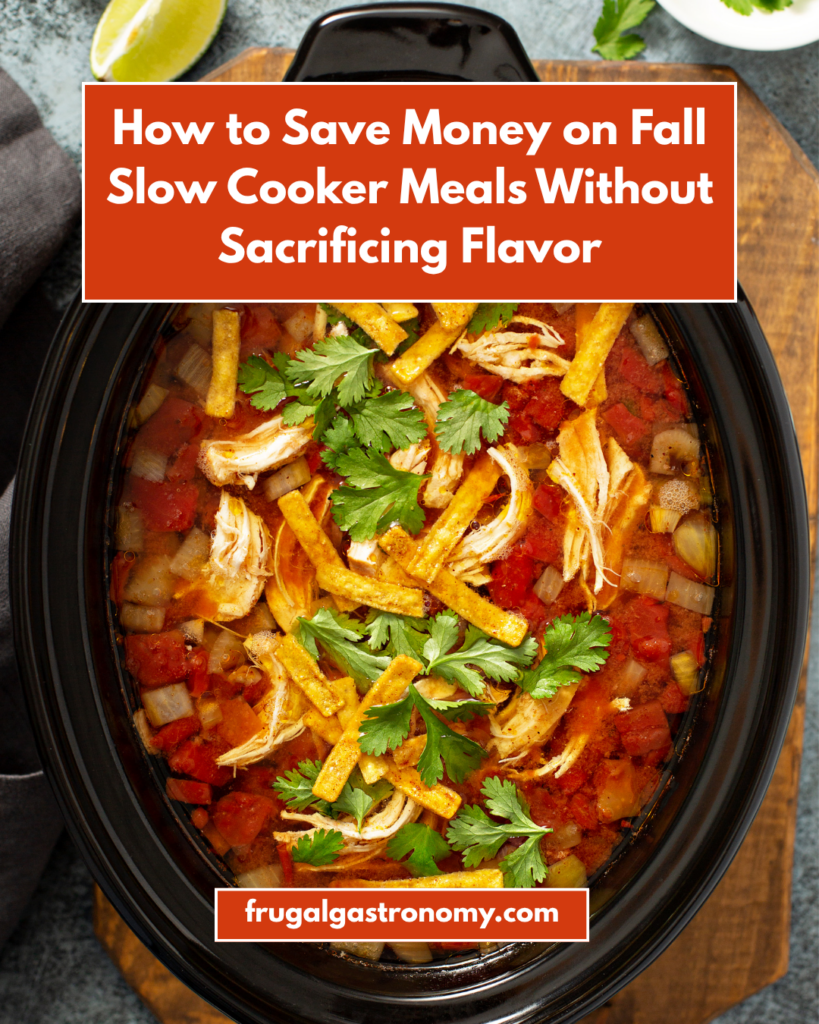
There’s a reason the slow cooker becomes a kitchen favorite when fall arrives. It can turn inexpensive ingredients into hearty meals with very little hands-on cooking, making it especially useful when you’re trying to keep both your grocery bill and your weeknight workload under control.
But there’s a difference between a slow cooker meal that’s inexpensive and one that’s actually flavorful.
You don’t need expensive cuts of meat, specialty sauces, or a long list of ingredients to make a great slow cooker dinner. The key is choosing affordable ingredients that benefit from slow cooking and using a few simple techniques to build flavor before everything goes into the cooker.
Frugal Gastronomy is an Amazon Associate and earns from qualifying purchases made through links in this post. The price you pay does not change.
Why Slow Cookers Are Good for a Budget
Slow cookers are particularly useful for budget cooking because they work so well with ingredients that can be less expensive at the grocery store.
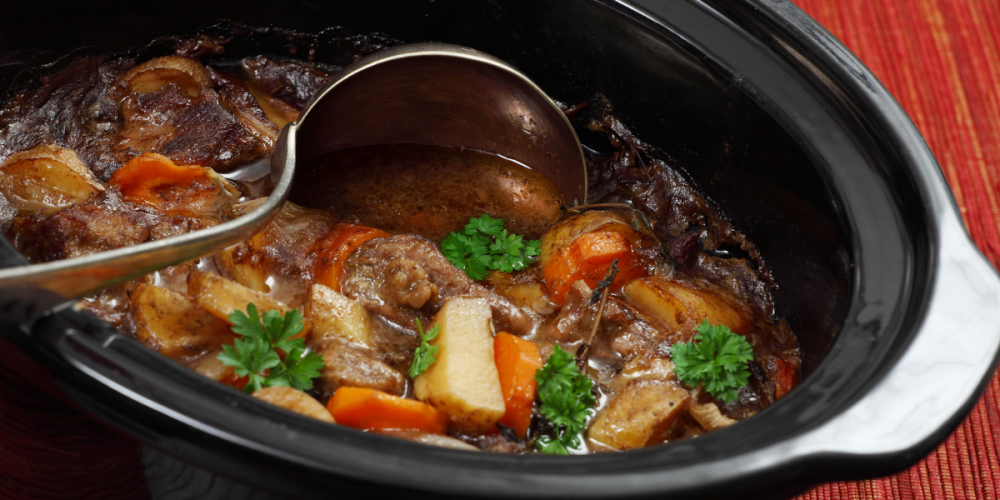
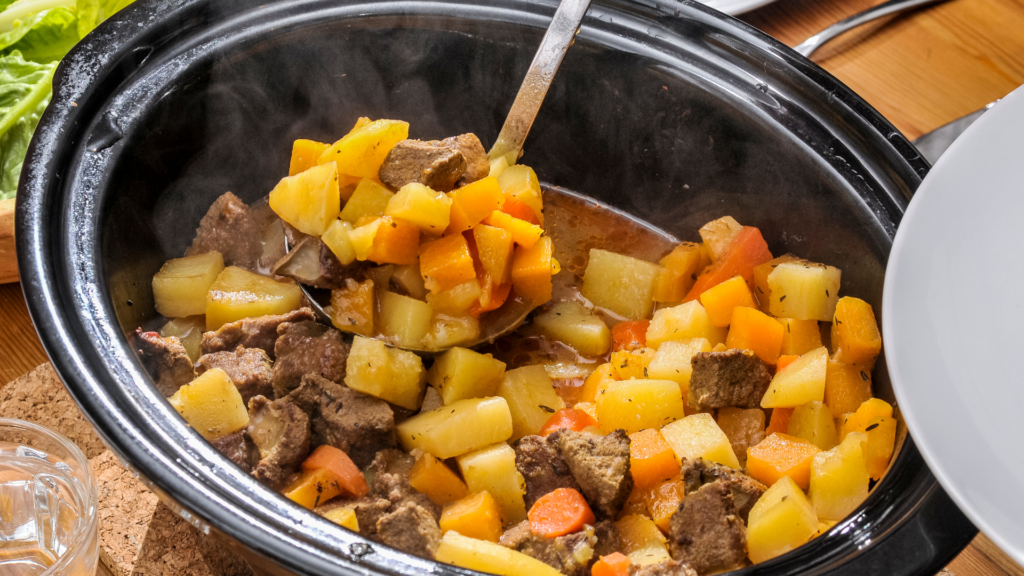
Tougher cuts of meat contain connective tissue that breaks down during long, moist cooking. As a result, you have tender and flavorful meals that doesn’t require you to stand for hours in front of the stove. Beans, lentils, potatoes, carrots, onions, and other inexpensive ingredients can also form the foundation of filling slow cooker meals.
The biggest advantage is that one batch can produce several servings. That means one grocery purchase can potentially cover dinner plus leftovers for another meal.
Choose Inexpensive Cuts That Benefit From Slow Cooking
Don’t spend your grocery budget on the most tender cut of meat for a slow cooker. Chuck roast, pork shoulder, chicken thighs, and other suitable cuts can provide plenty of flavor while generally costing less than premium cuts.
Look for meat that’s well suited to long cooking rather than simply choosing whatever happens to be on sale.
Each of those cuts has a recipe worth starting from. Chuck roast becomes Slow Cooker Korean Braised Beef, pork shoulder becomes Slow Cooker Cider-Braised Pork Shoulder with Apples and Onions, and bone-in thighs and drumsticks become Slow Cooker Chicken Adobo, which uses the cheapest pieces on the bird on purpose.
Brown Meat Before It Goes Into the Slow Cooker
You can put raw meat directly into a slow cooker, but taking a few extra minutes to brown it first can add another layer of flavor.
A hot skillet creates browning on the surface of the meat, giving the finished dish more depth. It also gives you an opportunity to develop flavorful browned bits in the pan.
This is one of the best techniques to use when you’re trying to make an inexpensive slow cooker meal taste more sophisticated.
The Korean braised beef depends on this step more than most. A slow cooker never gets hot enough to brown anything on its own, so everything the sauce gains from browning has to happen in a skillet first. That is also why the pan gets deglazed with broth and scraped into the cooker.
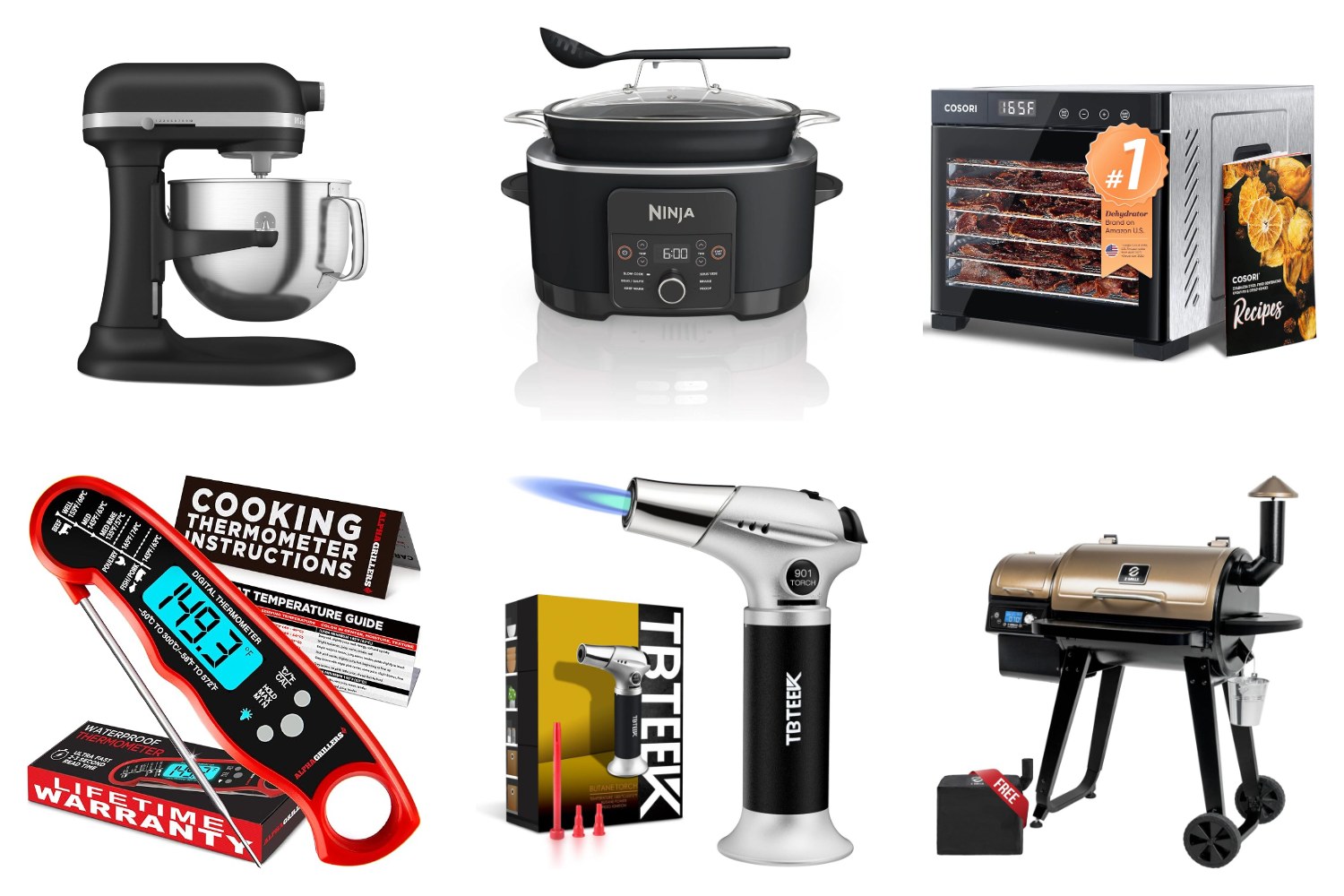
Browning is also the step most often skipped, and the reason is almost always the extra pan. A skillet, a slow cooker insert, and a transfer in between is enough friction to talk anyone out of it on a Tuesday night. Cookers that brown in their own pot remove the excuse. The Ninja PossibleCooker PLUS sears and sautés on its own heating element and then switches to slow cook without anything leaving the pot, so the browned bits end up in the sauce instead of in the sink.
You Don’t Need Expensive Slow Cooker Sauces
Pre-made sauces can be convenient, but they’re not always necessary.
A basic combination of broth, canned tomatoes, tomato paste, onions, garlic, dried herbs, spices, or a small amount of mustard can create a flavorful cooking liquid from ingredients you may already have.
The more sauces you make from pantry staples, the less you’ll need to buy specialty bottles for individual recipes.
Slow Cooker Chicken Adobo is the clearest proof of it. The entire sauce is vinegar, soy sauce, garlic, bay leaves and black pepper, and none of it comes out of a bottle.
Let Aromatics Do the Heavy Lifting
Onions, garlic, carrots, celery, and herbs are relatively inexpensive, but they can make a huge difference in a slow cooker meal.
Instead of treating them as filler, use them as the foundation of the dish. Cooking them slowly with meat, beans, broth, or tomatoes allows their flavors to blend throughout the meal.
Don’t Overfill the Slow Cooker
A slow cooker needs enough room for heat to circulate and for the food to cook properly. Overfilling it can affect cooking performance and make it harder to get consistent results.
Follow the capacity and food-safety guidance for your particular slow cooker rather than trying to stretch one batch beyond what the appliance is designed to handle.
Capacity is worth checking before you buy rather than after. The two-thirds rule means a six-quart cooker gives you about four quarts of working space, which is tight once a whole pork shoulder, the vegetables, and the liquid are all in there. An 8.5-quart cooker leaves roughly six quarts of usable room, enough for a large roast, a full pot of chili, or a double batch of beans without pushing past the fill line. Buying one size up is what makes the bigger, cheaper cut practical.
Use Beans and Lentils to Stretch Meat
You don’t necessarily have to eliminate meat to make a slow cooker meal cheaper. You can simply use less of it.
Beans and lentils can add protein, texture, and volume to chili, soups, stews, and other dishes. They can help turn a smaller amount of meat into enough food for several servings.
Beans can also carry a pot on their own. Slow Cooker Smoky Black Bean and Sweet Potato Chili is built on a one pound bag of dried black beans, which costs about two dollars and feeds six to eight people.
Use Seasonal Fall Vegetables
Fall vegetables are particularly useful in slow cooker meals because many hold up well during longer cooking.
Potatoes, carrots, sweet potatoes, squash, onions, and cabbage can add bulk and flavor without requiring expensive ingredients. Look for what’s on sale and adapt your recipe accordingly.
This is also a good way to use vegetables that might otherwise sit forgotten in the refrigerator.
Two recipes here lean on exactly that. Slow Cooker Thai Red Curry Butternut Squash and Chickpeas uses a whole squash bought at its cheapest rather than the pre-cut cubes that cost several times as much, and the cider-braised pork shoulder is built around apples and onions at their October price.
Don’t Put Every Ingredient in at the Beginning
Slow cooking doesn’t always mean putting everything into the cooker at the same time.
Some ingredients are better added toward the end so they retain their texture or freshness. Fresh herbs, dairy, delicate vegetables, and certain toppings may benefit from being added later depending on the recipe.
This small adjustment can keep a slow cooker meal from tasting flat or overcooked.
Two of the recipes here are built around that timing. The Thai red curry holds back a quarter of the coconut milk and all of the lime and herbs until the last few minutes, and the Korean braised beef gets its carrots and potatoes only for the final two hours, because a full eight turns them to paste.
Finish With Something Bright
Slow cooker meals can develop deep, rich flavors, but they can also taste heavy after several hours of cooking.
A small splash of vinegar or lemon juice, a spoonful of fresh herbs, or a little grated cheese can brighten the finished dish. You don’t need much, but that final touch can make the meal taste fresher and more balanced.
Make Leftovers Part of the Plan
A slow cooker meal is most economical when you actually use the entire batch.
Instead of serving the same leftovers several nights in a row, plan how you’ll transform them. Shredded chicken can become tacos or sandwiches, leftover chili can top baked potatoes, and cooked pork can become fillings for wraps or rice bowls.
By transforming your leftovers, your original grocery purchase stretches further without making every meal feel identical.
Cooking at that scale only pays off if the pot can hold it. A cooker in the 8.5-quart range will take chili for around twenty people or enough pulled pork for thirty sliders in a single run, which is the point where the cost per serving really drops. A keep-warm setting helps here too, since a pot that came up to temperature in the afternoon can still be serving at eight without anything being reheated a plate at a time.
How to Make Slow Cooker Meals Taste Better Without Spending More
There are many ways flavor can build up even before the slow cooker does its thing for hours.
Browning meat, sautéing onions, toasting spices, and using the browned bits from your skillet can add complexity without adding expensive ingredients. These extra steps aren’t always necessary, but they’re particularly worthwhile when you’re working with inexpensive ingredients.
Seasoning matters, too. Don’t assume that a long cooking time means the dish will automatically become flavorful. Taste the cooking liquid when it’s safe to do so, adjust the seasoning as needed, and finish the meal with something fresh or acidic.
The goal is to build layers of flavor rather than simply adding more ingredients.
How to Keep Slow Cooker Meals Affordable
One of the easiest ways to overspend on slow cooker meals is to buy ingredients specifically for one recipe.
Instead, build meals around inexpensive staples you already use. A bag of potatoes can work in soups, stews, casseroles, and breakfast hash, while a large package of chicken thighs can become several different meals.
You can also shop according to what’s on sale. If chicken thighs are inexpensive one week, build a meal around them; if beans, squash, or pork are discounted the next week, change the plan.
A flexible recipe is often more budget-friendly than a rigid one.
Frequently Asked Questions (FAQ’s)
What are the cheapest meats for slow cooking?
Chicken thighs, pork shoulder, chuck roast, and other tougher cuts that benefit from long cooking can be good choices for budget-conscious slow cooker meals. Prices vary by location and sale, so compare the cost per pound rather than assuming one cut is always cheapest.
Do you need to brown meat before slow cooking?
No, browning isn’t required for the meat to cook safely in a slow cooker. However, browning can add deeper flavor, making it a useful step when you want an inexpensive meal to taste more complex.
Can you make slow cooker meals without meat?
Absolutely. Beans, lentils, potatoes, squash, mushrooms, and other vegetables can form the basis of filling slow cooker meals. Plant-based meals can also be an inexpensive way to add variety to your fall dinner rotation.
The Thai red curry butternut squash and chickpeas and the smoky black bean and sweet potato chili are both built this way, and neither reads as a compromise.
How can I make slow cooker meals more flavorful?
Start by browning meat when appropriate, cooking aromatics, seasoning throughout the process, and using flavorful liquids such as broth or tomatoes. Finishing the dish with fresh herbs, lemon juice, vinegar, or another bright ingredient can also balance the rich flavors created during slow cooking.
How can I make one slow cooker meal last longer?
Use inexpensive ingredients such as beans, lentils, potatoes, rice, or seasonal vegetables to add volume, then plan a second meal around the leftovers. Transforming leftovers into something different can help you stretch your grocery budget without eating exactly the same dinner repeatedly.
Final Thoughts
A slow cooker can be one of the most useful tools in a frugal kitchen, but the savings don’t come from simply throwing cheap ingredients into a pot.
Choose cuts that benefit from slow cooking, buy seasonal vegetables, stretch meat with beans and lentils, make your own sauces from pantry staples, and take a few minutes to build flavor before and after cooking.
You don’t need expensive ingredients to make a slow cooker dinner taste rich and comforting. All you need is to make the inexpensive ingredients count.